AMH Normal Range by Age: Normal AMH Levels in Women Explained AMH Normal Range by Age: Normal AMH Levels in Women Explained

AMH Normal Range: What Your AMH Result Means Wed , Jun 26

About the Health Information

Our Health information will help you stay up to date on what is happening in health care. We bring you news/information/perspectives around health care innovations, preventive medicine, early diagnosis, nutrition and diet, women’s health, men’s health, children’s health, latest technologies, treatments and surgeries, diseases and conditions, fitness and more.


Popular Posts
Medical Emergency Mon , Dec 27
Shoulder Arthritis and its types

  • Seeing your AMH test result for the first time can feel confusing, especially if the number looks lower or higher than expected. Many women immediately wonder:

    “Is my AMH level normal?”

  • The important thing to understand is:

    “AMH is not a pregnancy result.”

    It is a hormone test that helps doctors understand ovarian reserve, which means the number of eggs remaining in the ovaries.

    A low AMH result can feel worrying, but fertility depends on several factors beyond just one test value.

    Reviewed by fertility specialists at MGM Healthcare.

What Is a Normal AMH Level?

  • In many women:
    AMH between 1.0 – 3.5 ng/mL
    is commonly considered a normal ovarian reserve range.

    However, doctors also consider:

    • age
    • menstrual cycle history
    • hormonal health
    • fertility goals
    • ultrasound findings

    before interpreting AMH results.

  • Women trying to understand the full fertility evaluation process may also want to read about AMH test timing, ovarian reserve and fertility evaluation.

Normal AMH Levels by Age

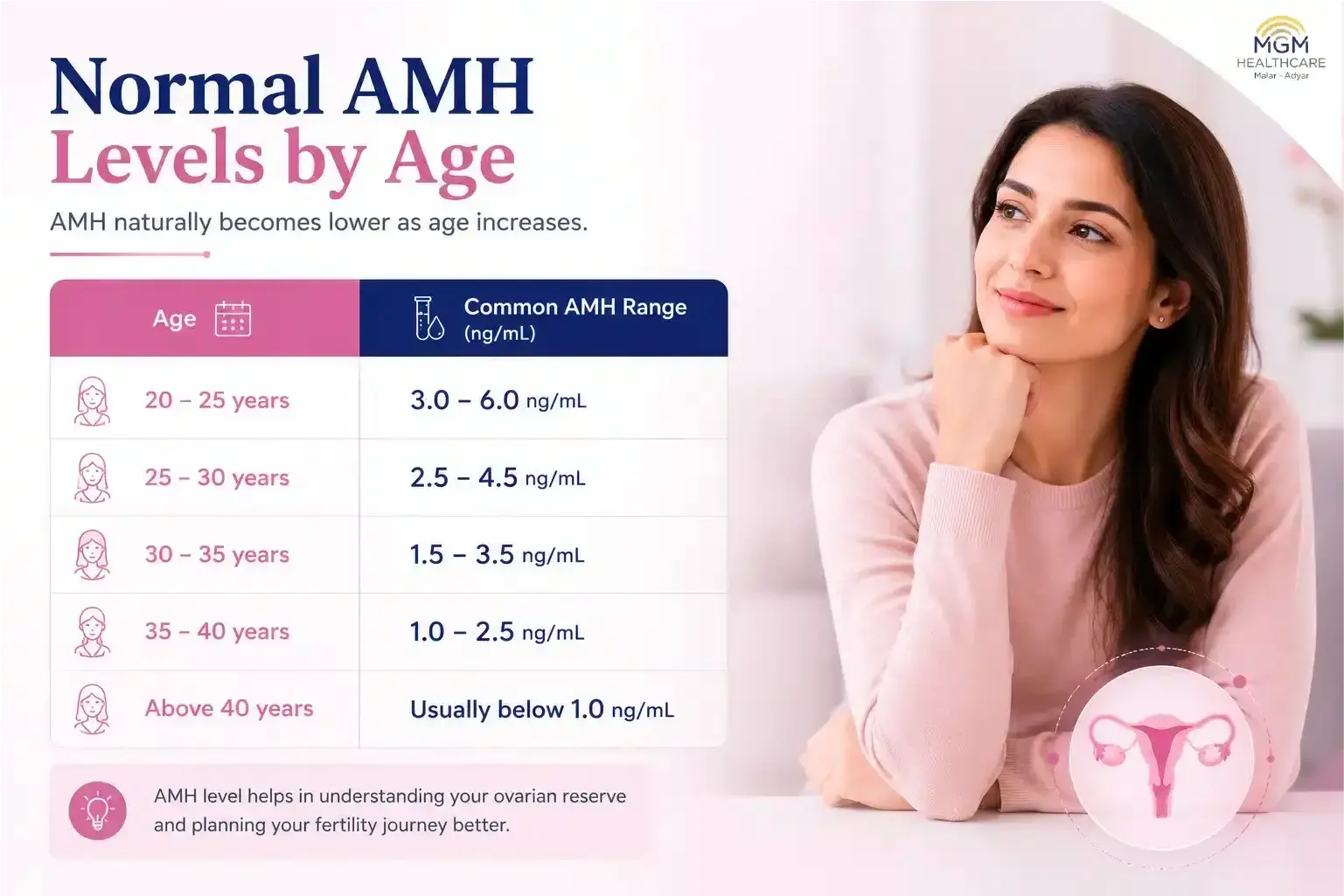
  • AMH naturally becomes lower as age increases.

    Age Common AMH Range
    20 – 25 years 3.0 – 6.0 ng/mL
    25 – 30 years 2.5 – 4.5 ng/mL 
    30 – 35 years 1.5 – 3.5 ng/mL
    35 – 40 years 1.0 – 2.5 ng/mL
    Above 40 years Usually below 1.0 ng/mL

    These values are approximate and may differ from person to person.

What Does Low AMH Mean?

  • Low AMH may mean the egg count is lower than expected for age.

    But:

    Low AMH does not always mean infertility.

    Many women with low AMH still:

    • conceive naturally
    • respond to fertility treatment
    • have successful pregnancies

    Many women panic after seeing a low AMH result, but fertility depends on multiple factors beyond one hormone value.


  • Women concerned about reduced ovarian reserve may also want to understand low AMH levels, pregnancy chances and treatment options.

What Does High AMH Mean?

  • Higher AMH levels are sometimes seen in women with:

    • PCOS
    • irregular periods
    • hormonal imbalance

    Doctors may recommend further hormone evaluation if AMH levels are unusually high.

  • Women with irregular cycles may also want to understand hormonal imbalance and irregular periods in women.

Does AMH Decide Fertility Completely?

  • No.

    AMH mainly helps estimate:

    egg quantity

  • It does not directly measure:

    egg quality

  • This is why doctors may also combine AMH with:

    • ultrasound scans
    • ovulation tracking
    • hormone tests
    • fertility evaluation

    Age still remains one of the most important factors affecting fertility.

When Is an AMH Test Usually Recommended?

  • Doctors may recommend an AMH test for:

    • fertility evaluation
    • delayed pregnancy
    • IVF planning
    • egg freezing consultation
    • irregular periods
  • Women planning future fertility may also want to explore egg freezing and fertility preservation options.

Conclusion

  • AMH levels help doctors understand ovarian reserve and fertility health, but one AMH number alone does not decide pregnancy chances.

  • Understanding your AMH result along with age and overall reproductive health can help you make better fertility and pregnancy planning decisions.

Frequently Asked Questions

What is the normal AMH range?

In many women, AMH between 1.0 – 3.5 ng/mL is commonly considered normal.

Does AMH become lower with age?

Yes. AMH naturally decreases as age increases.

Can I get pregnant with low AMH?

Yes. Many women with low AMH still conceive naturally or with fertility support.

Is high AMH always good?

Not always. Very high AMH may sometimes be linked to PCOS.

What is a good AMH level for IVF?

AMH levels help doctors plan IVF treatment, but IVF success also depends on factors such as age, egg quality and overall reproductive health.