Our Health information will help you stay up to date on what is happening in health care. We bring you news/information/perspectives around health care innovations, preventive medicine, early diagnosis, nutrition and diet, women’s health, men’s health, children’s health, latest technologies, treatments and surgeries, diseases and conditions, fitness and more.


Waking up gasping for air or struggling to breathe at night can be frightening. While it may sometimes be caused by mild conditions like allergies, it can also be linked to underlying issues such as asthma, sleep apnea, lung infections, or heart problems.
If these symptoms occur frequently or worsen over time, it is important to understand the cause and seek medical evaluation early.
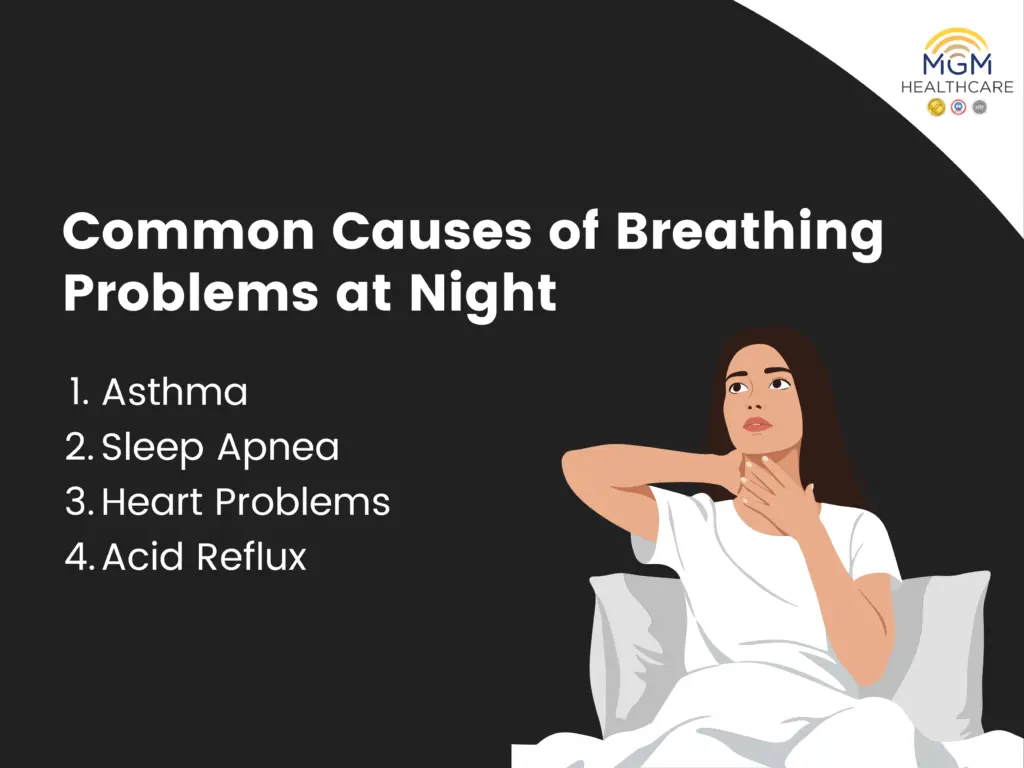
Breathing problems at night are commonly caused by conditions such as asthma, sleep apnea, chronic lung disease (COPD), heart problems, acid reflux, or respiratory infections. These symptoms often worsen when lying down, making breathing more difficult during sleep.
Yes, in some cases. Breathing problems at night can indicate underlying lung or heart conditions such as asthma, sleep apnea, or fluid buildup. If symptoms are persistent, worsening, or associated with chest pain or gasping, immediate medical attention may be required.
If you have trouble breathing when lying down or sleeping, it may be more than allergies. These symptoms often get worse at night because the lungs don’t expand as much, the airways are narrower, and fluid moves into the chest.

Ignoring early signs might make dangerous conditions worse.
If you experience any of the following, please seek medical assistance promptly:
Early diagnosis greatly improves results.
If breathing problems at night are not treated, they can lead to serious health complications over time.
These may include:
In many cases, these complications develop gradually and may become severe if left untreated.
Early diagnosis and timely medical care can help prevent these risks and improve long-term outcomes.
Doctors diagnose nighttime breathing problems using a combination of clinical evaluation and tests such as chest X-rays, CT scans, lung function tests, sleep studies, and blood oxygen monitoring. These tests help identify the exact cause and guide appropriate treatment.
People who are more likely to have trouble breathing at night are:
Knowing your risk helps you get help sooner.
Good behaviors help your lungs work well.
If you have trouble breathing at night that doesn’t go away, gets worse, or is accompanied by chest pain, blue lips, confusion, fever, or severe shortness of breath, you should visit a doctor right away. Early diagnosis can stop respiratory failure, heart strain, and problems that last a long time.
Modern imaging, pulmonary testing, and advanced respiratory treatments now allow faster diagnosis and effective management of breathing disorders, improving patient outcomes significantly.
Dr. Sridhar R
Senior Consultant – Interventional Pulmonology
Dr. Sridhar R. specializes in diagnosing and treating lung conditions such as asthma, COPD, and sleep-related breathing disorders. He focuses on early diagnosis and advanced treatment approaches to improve patient outcomes.
Available for consultation in Chennai at MGM Healthcare.
Not always. Breathing problems at night can sometimes be caused by mild conditions such as allergies or temporary infections. However, if symptoms persist, worsen, or occur frequently, they may indicate underlying lung or heart conditions and should not be ignored.
Mild cases may improve on their own. However, conditions such as sleep apnea, asthma, or heart-related problems usually require medical evaluation and treatment to prevent complications.
Yes. Treatments such as inhalers, medications, oxygen therapy, and sleep-related therapies are generally safe and effective when prescribed and monitored by a doctor.
Recovery depends on the underlying cause. With proper diagnosis and treatment, many patients begin to see improvement within a few weeks.
This may be caused by sleep apnea, asthma, or heart-related conditions that affect breathing during sleep.
Shortness of breath when lying down may be caused by conditions such as heart problems, asthma, or fluid buildup in the lungs, which can worsen in a lying position.