Our Health information will help you stay up to date on what is happening in health care. We bring you news/information/perspectives around health care innovations, preventive medicine, early diagnosis, nutrition and diet, women’s health, men’s health, children’s health, latest technologies, treatments and surgeries, diseases and conditions, fitness and more.

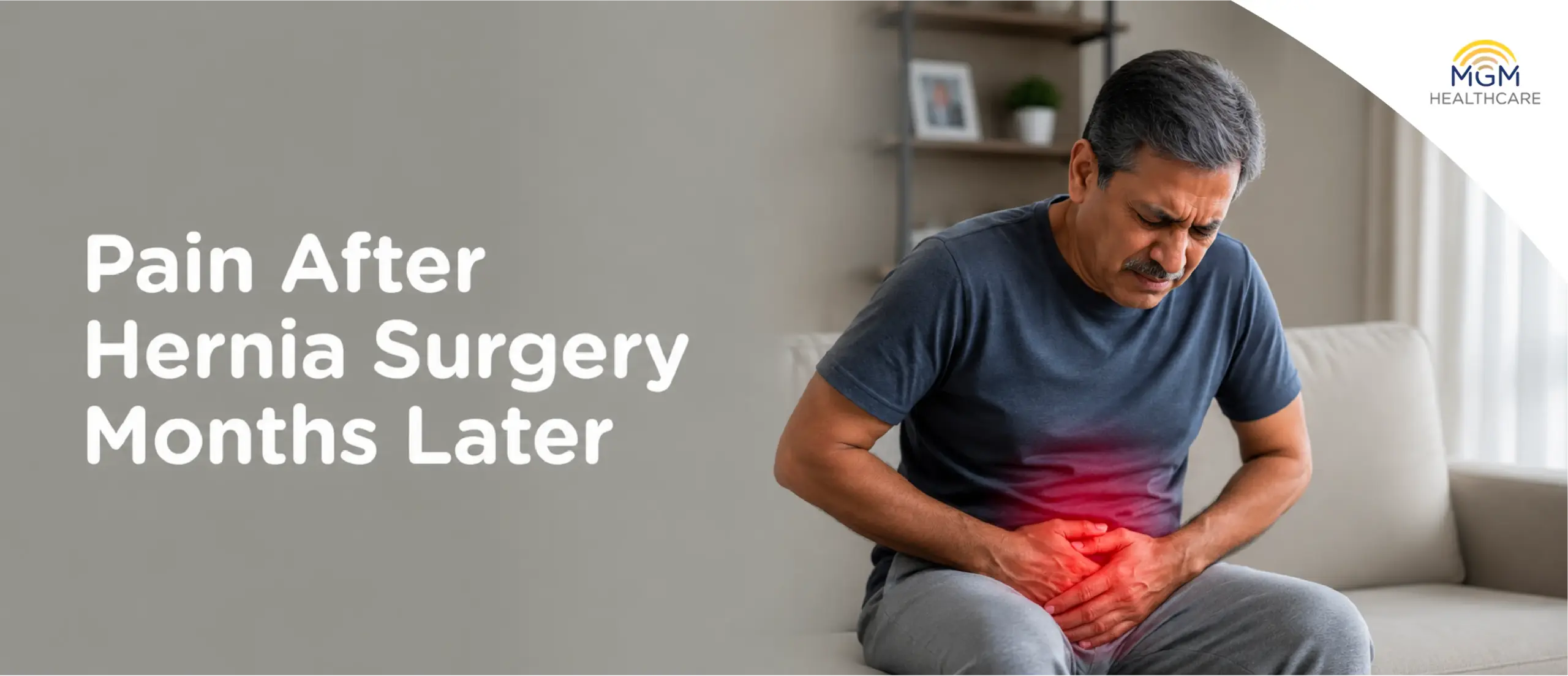
Pain months after hernia surgery can be worrying, but it does not always mean something is wrong.
Common causes include:
Seek medical advice if your pain is worsening, associated with swelling or a new bulge, or affects your daily activities.
Most people recover well after hernia surgery. However, some patients notice pain that starts or continues weeks or months later.
Mild discomfort can be part of the healing process. But pain that persists, worsens, or interferes with daily life should not be ignored.
Delayed pain may be linked to nerve irritation, scar tissue, muscle strain, mesh-related issues, or hernia recurrence.
Knowing the possible causes can help you seek timely medical advice.
Pain that continues or begins more than three months after hernia repair is often called chronic post-hernia repair pain.
The discomfort may be:
While some soreness can persist during recovery, ongoing pain that affects your quality of life should be evaluated by a healthcare professional.
People describe delayed pain in different ways.
Common symptoms include:
The type and location of pain can help identify the underlying cause
Several factors can contribute to ongoing pain after hernia repair.
Nerve Irritation or Entrapment
Nearby nerves can become irritated or trapped in scar tissue during healing. This may cause burning, tingling, or shooting pain.
Scar Tissue Formation
Scar tissue forms naturally as the body heals. In some cases, it can lead to tightness, reduced flexibility, or discomfort during movement.
Mesh-Related Issues
If surgical mesh was used, some patients may experience irritation, inflammation, or chronic discomfort around the repair site.
Muscle Weakness or Strain
Returning to strenuous activities too soon can stress healing tissues and muscles, leading to ongoing pain.
Hernia Recurrence
Although uncommon, a hernia can return after surgery. Recurrence often causes pain along with a visible or noticeable bulge.
Contact your healthcare provider if you experience:
These symptoms may require further medical attention.
Your doctor may recommend:
Early assessment can help identify the cause and prevent further complications.
Treatment depends on the underlying cause and severity of your symptoms.
Options may include:
Identifying the cause early allows for more effective treatment and improved recovery.
During Recovery
Support Long-Term Recovery
Schedule a medical evaluation if:
Early evaluation can help identify potential complications and improve outcomes.
Pain months after hernia surgery is not always a sign of a serious problem, but it should not be ignored.
Mild discomfort can occur as your body continues to heal. However, persistent or worsening pain may be related to nerve irritation, scar tissue, mesh-related issues, muscle strain, or hernia recurrence.
If your symptoms interfere with daily activities or continue to worsen, consult your doctor for an evaluation.
Early assessment can help identify the cause, relieve symptoms, and support a smoother recovery.
Dr. P. Anbalagan, MBBS, MS (General Surgery), MCh (Surgical Gastroenterology), is a Senior Consultant at MGM Healthcare with over 21 years of experience in General Surgery and 13 years of specialised experience in Surgical Gastroenterology.
His expertise includes hernia surgery, advanced laparoscopic and robotic gastrointestinal procedures, pancreatic surgery, and gastrointestinal cancer surgeries.
He is a recipient of the Dr. Rangabashyam Gold Medal in Surgical Gastroenterology and has authored multiple peer-reviewed publications.
Experiencing persistent pain or discomfort after hernia surgery?
Consult Dr. P. Anbalagan and the Surgical Gastroenterology team at MGM Healthcare for a comprehensive evaluation and personalised treatment plan.
Mild discomfort may occur during healing. However, pain that persists for more than three months or worsens over time should be evaluated by a healthcare professional.
Yes. Although hernia repair is generally successful, recurrence is possible.
Nerve-related pain is often described as burning, tingling, sharp, or shooting.
Not necessarily. Gentle activity may support recovery, but you should avoid strenuous exercise and follow your surgeon’s recommendations.
Seek medical advice if you experience persistent pain, increasing discomfort, swelling, a new bulge, fever, or symptoms that interfere with your daily life.