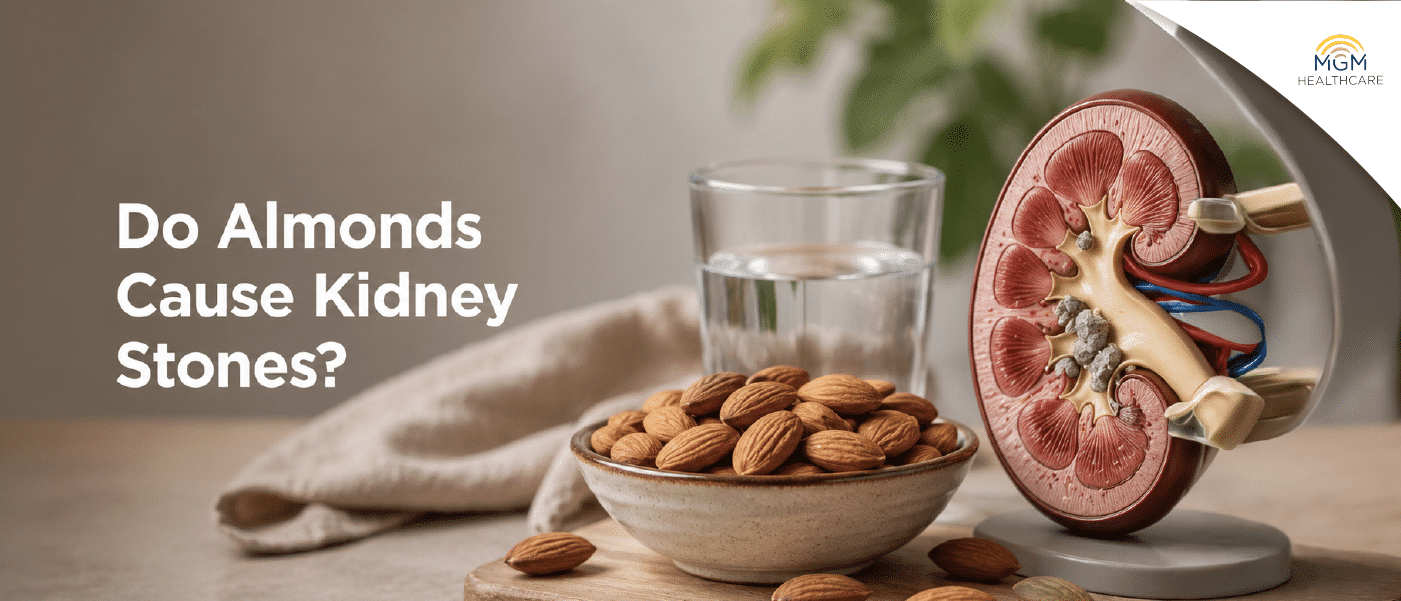
Do Almonds Cause Kidney Stones? Benefits, Risks, and Oxalate Facts Do Almonds Cause Kidney Stones? Benefits, Risks, and Oxalate Facts

Do Almonds Cause Kidney Stones? What You Need to Know Fri , Jun 19

About the Health Information

Our Health information will help you stay up to date on what is happening in health care. We bring you news/information/perspectives around health care innovations, preventive medicine, early diagnosis, nutrition and diet, women’s health, men’s health, children’s health, latest technologies, treatments and surgeries, diseases and conditions, fitness and more.


Popular Posts
Medical Emergency Mon , Dec 27
Shoulder Arthritis and its types

Quick Facts

  • Rich in healthy fats, fibre, and protein, almonds offer several important nutrients that support overall health. However, they also contain oxalates, which may contribute to certain types of kidney stones in some individuals.

    Key points to remember:

    • Almonds contain moderate to high levels of oxalates.
    • Oxalates can contribute to calcium oxalate kidney stones.
    • Not everyone who eats almonds develops kidney stones.
    • For individuals at risk of recurrent kidney stones, limiting foods rich in oxalates may be beneficial.
    • Portion size and overall diet play an important role.

    If you have a history of kidney stones or chronic kidney disease, consult your doctor or dietitian before making significant dietary changes.

Introduction

  • Almonds are often considered a healthy snack because they provide protein, healthy fats, fibre, vitamin E, and magnesium.

    However, many people with kidney stones wonder whether almonds are safe to eat.

    The answer depends on the type of kidney stone you have, your overall diet, and your individual health condition.

    For some people, excessive consumption of almonds may increase the risk of developing certain kidney stones.

Do Almonds Cause Kidney Stones?

  • Almonds do not directly cause kidney stones in everyone.

    However, almonds contain oxalates, naturally occurring compounds found in many plant-based foods.

    High levels of oxalates can bind with calcium in the urine and contribute to the formation of calcium oxalate stones, the most common type of kidney stone.

    If you have a history of calcium oxalate stones, your healthcare provider may recommend limiting high-oxalate foods, including almonds.

What Are Oxalates?

  • Oxalates are naturally occurring substances found in foods such as:

    • Almonds
    • Spinach
    • Beets
    • Sweet potatoes
    • Chocolate
    • Tea

    In most people, oxalates are eliminated through urine without causing problems.

    Excess oxalates can bind with calcium in the urine, increasing the likelihood of crystal formation that may lead to kidney stones.

Do Almonds Have High Oxalate Content?

  • Yes. Almonds are considered a high-oxalate food.

    The oxalate content can vary depending on serving size and preparation methods.

    Eating small amounts occasionally is unlikely to cause kidney stones in healthy individuals. However, consuming large quantities of almonds regularly may increase the risk in people who are prone to calcium oxalate stones.

Are Almonds Bad for Your Kidneys?

  • For most healthy individuals, almonds are not harmful to the kidneys.

    They provide several nutritional benefits, including:

    • Healthy unsaturated fats
    • Plant-based protein
    • Fibre
    • Vitamin E
    • Magnesium

    However, people with certain kidney conditions may need to monitor their intake.

    This includes individuals with:

    • A history of recurrent kidney stones
    • Chronic kidney disease
    • Elevated potassium levels
    • Dietary restrictions recommended by their healthcare provider

Are Almonds Safe for Kidney Stone Patients?

  • If you have previously had calcium oxalate stones, you may not need to avoid almonds completely.

    Instead, your healthcare provider may recommend:

    • Limiting portion sizes
    • Drinking plenty of water
    • Consuming calcium-rich foods with meals
    • Following a personalised low-oxalate diet

    Dietary recommendations vary depending on the type of kidney stone you have.

What About Almond Milk?

  • Almond milk may also contain oxalates, although levels vary by brand and preparation method.

    Unsweetened almond milk consumed in moderation is generally safe for most people.

    If you have recurrent calcium oxalate stones, check nutrition labels and discuss suitable alternatives with your healthcare provider.

Are Walnuts Better Than Almonds for Kidney Stones?

  • Walnuts also contain oxalates, although their oxalate content differs from almonds.

    Neither almonds nor walnuts need to be completely avoided unless your healthcare provider specifically recommends dietary restrictions.

    A balanced diet, adequate hydration, and portion control are more important than eliminating individual foods.

How Can You Reduce Your Risk of Kidney Stones?

  • You can lower your risk of kidney stones by:

    • Drinking enough water throughout the day
    • Limiting excessive intake of high-oxalate foods
    • Including adequate calcium in your diet
    • Reducing excess salt intake
    • Limiting processed foods
    • Maintaining a healthy body weight

    If you have a history of kidney stones, regular follow-up with your doctor is important.

When Should You See a Doctor?

  • Consult a healthcare professional if you experience:

    • Severe pain in your back or side
    • Blood in your urine
    • Pain during urination
    • Frequent urinary tract infections
    • Nausea or vomiting associated with pain

    Getting evaluated early can help identify the underlying issue and guide the next steps in care.

Conclusion

  • Almonds do not directly cause kidney stones in everyone. However, because they contain oxalates, excessive consumption may increase the risk of calcium oxalate stones in susceptible individuals.

    For most healthy people, almonds can be enjoyed as part of a balanced diet.

    If you have a history of kidney stones or chronic kidney disease, speak with your healthcare provider about the right dietary choices for your needs.

Book an Appointment

  • Concerned about kidney stones or unsure whether almonds are suitable for your diet?

    Consult Dr. V. Chandrasekaran and the Nephrology team at MGM Healthcare for a comprehensive kidney health evaluation and personalised dietary guidance.

Frequently Asked Questions

Can almonds cause kidney stones?

Almonds contain oxalates, which may contribute to calcium oxalate kidney stones in people who are prone to them.

How many almonds can I eat if I have kidney stones?

The appropriate amount varies depending on your medical history and the type of kidney stone you have. Consult your healthcare provider for personalised advice.

Are almonds bad for people with kidney disease?

Not always. Some people with chronic kidney disease may need to monitor their intake of potassium, phosphorus, or oxalates.

Is almond milk safe for kidney stone patients?

Almond milk may contain oxalates. If you have recurrent calcium oxalate stones, speak with your doctor or dietitian about suitable options.

What foods should I avoid if I have calcium oxalate kidney stones?

Your healthcare provider may recommend limiting foods high in oxalates, such as almonds, spinach, beets, and chocolate.