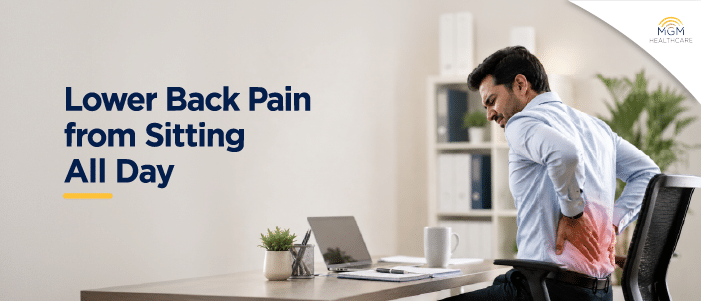
Lower Back Pain from Sitting All Day? Causes, Symptoms & Prevention Lower Back Pain from Sitting All Day? Causes, Symptoms & Prevention

Lower Back Pain from Sitting All Day: Is Your Work Routine Affecting Your Spine? Wed , Jun 24

About the Health Information

Our Health information will help you stay up to date on what is happening in health care. We bring you news/information/perspectives around health care innovations, preventive medicine, early diagnosis, nutrition and diet, women’s health, men’s health, children’s health, latest technologies, treatments and surgeries, diseases and conditions, fitness and more.


Popular Posts
Medical Emergency Mon , Dec 27
Shoulder Arthritis and its types

Quick Facts

  • If your lower back feels stiff or uncomfortable after a day at your desk, you are not alone.

    Spending long periods in a seated position can place continuous stress on the muscles, joints, and structures that support the lower back.

    Common signs associated with prolonged sitting include:

    • Stiffness after getting up from a chair
    • Lower back discomfort during work hours
    • Reduced flexibility
    • Muscle tightness around the hips and back
    • Pain that improves after movement

    Simple changes to daily habits can often help reduce strain and improve comfort.

Introduction

  • Many people associate back pain with lifting heavy objects or sports injuries. However, discomfort can also develop from spending too much time sitting.

    Whether you work at a desk, drive for long hours, attend frequent meetings, or spend significant time on digital devices, your daily routine may influence how your back feels.

    The effects are often gradual. Instead of sudden pain, you may notice stiffness, reduced mobility, or recurring discomfort that becomes more noticeable over time.

    Understanding the connection between prolonged sitting and lower back pain can help you make simple adjustments that support long-term spinal health.

Why Does Sitting Affect the Lower Back?

  • The spine is designed to support movement throughout the day.

    When you remain seated for extended periods:

    • The lower back experiences continuous pressure.
    • Hip muscles may become tight.
    • Core muscles become less active.
    • Blood circulation can slow down.
    • Joint mobility may be reduced.

    Over time, these changes can contribute to discomfort and stiffness, particularly in the lower back region.

Signs That Sitting May Be Contributing to Your Back Pain

  • Pain That Improves After Moving Around

    If discomfort decreases after standing, stretching, or walking, prolonged sitting may be playing a role.

    Stiffness After Long Work Hours

    Many people notice that their back feels progressively tighter as the workday continues.

    Difficulty Standing Up Comfortably

    A feeling of stiffness when rising from a chair is a common complaint among office workers and individuals with sedentary routines.

    Tightness Around the Hips and Lower Back

    The muscles surrounding the hips and pelvis can become tight after long periods of sitting, which may affect the lower back.

Is Poor Posture the Only Cause?

  • Not necessarily.

    While posture matters, lower back discomfort is often influenced by multiple factors working together.

    These may include:

    • Limited physical activity
    • Weak core muscles
    • Poor workstation setup
    • Lack of movement breaks
    • Inadequate sleep
    • Existing spinal conditions

    Improving posture alone may not completely resolve symptoms if other contributing factors remain unaddressed.

How Your Workspace Can Influence Back Health

  • Small adjustments to your workstation may help reduce unnecessary strain.

    Consider:

    • Keeping both feet flat on the floor
    • Supporting the natural curve of your lower back
    • Positioning the screen at eye level
    • Keeping shoulders relaxed
    • Avoiding prolonged leaning forward

    Comfortable positioning helps minimise stress on the spine throughout the day.

Why Movement Matters More Than Perfect Posture

  • Even the best sitting posture should not be maintained for hours without movement.

    Changing positions regularly allows muscles and joints to stay active.

    Helpful habits include:

    • Standing every 30 to 60 minutes
    • Walking briefly during breaks
    • Performing simple stretching exercises
    • Alternating between sitting and standing when possible

    Regular movement often provides greater benefit than remaining seated in a single position all day.

When Should You Seek Medical Advice?

  • Occasional stiffness is common and often improves with movement.

    However, you should consider medical evaluation if:

    • Pain lasts longer than a few weeks
    • Symptoms are becoming more frequent
    • Discomfort interferes with daily activities
    • Pain travels into the legs
    • Numbness or weakness develops
    • Sleep is affected by back pain

    These symptoms may indicate an underlying spinal condition that requires professional assessment.

Daily Habits That Support a Healthy Spine

  • Start the Day With Gentle Movement

    Simple stretching or a short walk can help loosen stiff muscles and joints.

    Avoid Remaining Seated for Long Periods

    Frequent position changes reduce the continuous stress placed on the lower back.

    Strengthen Core Muscles

    Core strength helps provide stability and support for the spine.

    Stay Physically Active

    Regular exercise promotes flexibility, circulation, and musculoskeletal health.

    Prioritise Quality Sleep

    Rest and recovery are essential for maintaining healthy muscles and joints.

Expert Insight

  • “Many people associate lower back pain with injuries, but prolonged sitting can also place continuous stress on the spine and surrounding muscles. Small adjustments such as improving workstation ergonomics, taking regular movement breaks, and maintaining physical activity can make a significant difference in reducing discomfort and protecting long-term spinal health.”

    – Dr. Karunakaran, Director and Senior Consultant, Department of Spine Surgery, MGM Healthcare

Conclusion

  • Lower back pain is not always caused by an injury or a serious spinal condition.

    For many people, discomfort develops gradually due to prolonged sitting, reduced movement, and everyday work habits.

    Paying attention to how your body responds during the day, improving your workstation setup, and incorporating regular movement can help reduce strain and support long-term spinal health.

About the Reviewer

  • Dr. Karunakaran is the Director and Senior Consultant in the Department of Spine Surgery at MGM Healthcare.

    He specialises in the diagnosis and treatment of spinal disorders, degenerative spine conditions, chronic back pain, spinal deformities, and complex spine surgery. With extensive experience in managing both surgical and non-surgical spine conditions, he focuses on helping patients improve mobility, reduce pain, and maintain long-term spinal health.

Book an Appointment

  • Experiencing persistent lower back pain, stiffness after sitting, or discomfort that affects your daily activities?

    Consult Dr. Karunakaran and the Spine Surgery team at MGM Healthcare for a comprehensive evaluation and personalised treatment plan.

Frequently Asked Questions

Can sitting all day cause lower back pain?

Extended periods of sitting can contribute to stiffness, muscle tightness, and lower back discomfort in some individuals.

Why does my back feel better after walking?

Movement helps activate muscles, improve circulation, and reduce stiffness that may develop during prolonged sitting.

How often should I take a break from sitting?

Standing up and moving every 30 to 60 minutes can help reduce stress on the lower back.

Is posture the main cause of lower back pain?

Posture is one factor, but activity levels, muscle strength, workstation setup, and overall health also play important roles.

When should I be concerned about lower back pain?

Persistent pain, symptoms that spread into the legs, numbness, weakness, or discomfort that affects daily activities should be evaluated by a healthcare professional.