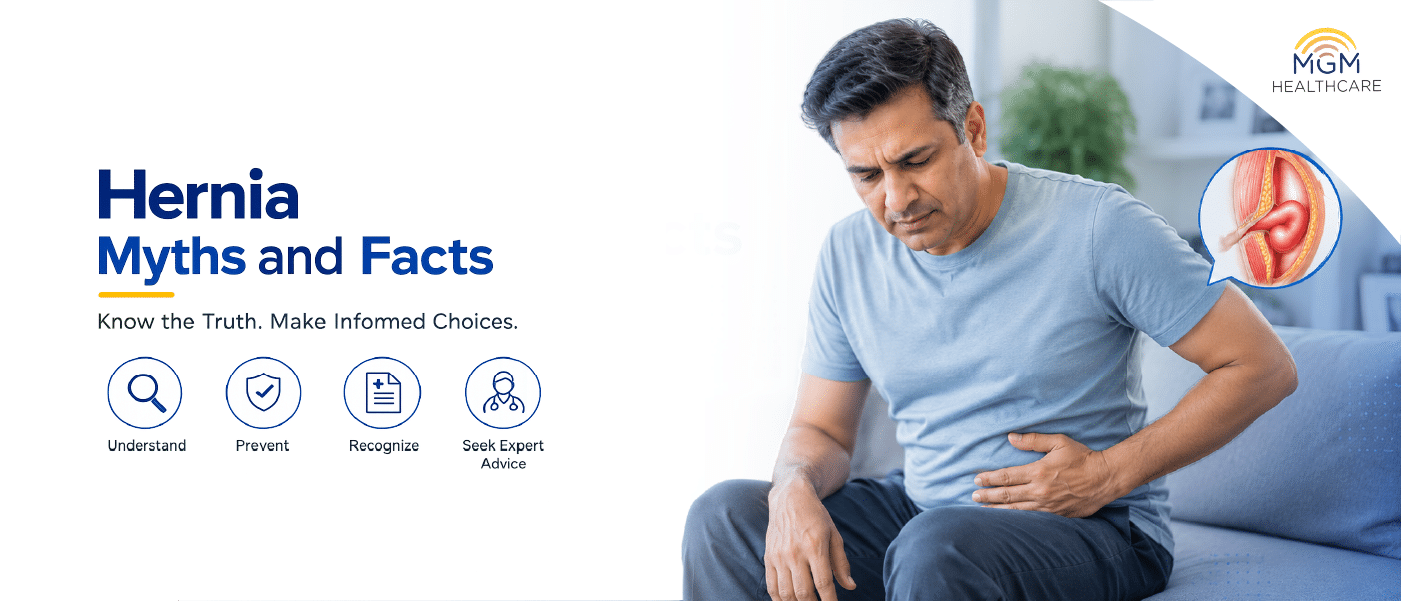
Myth: A hernia will go away with rest.
Fact: Rest may reduce discomfort, but it cannot repair the weakened muscle.
Myth: Only men develop hernias.
Fact: Hernias can affect both men and women, although some types are more common in men.
Myth: If the hernia doesn’t hurt, it isn’t serious.
Fact: Some hernias cause little or no pain at first. Without treatment, they may become larger or lead to complications.
Myth: Exercise can cure a hernia.
Fact: Exercise cannot repair a hernia. In some cases, heavy lifting or strenuous exercise may make it worse.
Myth: Hernia surgery requires a long recovery.
Fact: Many hernia repairs are now performed using minimally invasive techniques, which may allow suitable patients to recover more quickly.



 In-person Consultation
 Online Video Consultation
 Preventive Health
 Treatment Enquiries
 Find a Doctor
 Access the Patient Portal
 +91 44 4524 2407
  Cardiac Sciences
 Gastro Sciences
 Minimal Access GI & Bariatric Surgery
 Heart & Lung Transplant
 Multi-Visceral and Abdominal Organ Transplant
 Liver Transplant
 Neurosurgery
 Neurology
 Spine Surgery
 Obstetrics and Gynaecology
 Orthopaedics
 Total Knee replacement
 Renal Sciences
 ENT, Head & Neck surgery
 Internal Medicine
 Anaesthesiology & SICU
 Emergency Medicine
 Radiology and Imaging Services
 Aesthetic & Plastic Surgery
 Dermatology
 Laboratory services & Blood Bank
 Maxillofacial & Dental Surgery
 Critical Care
 Opthamology
 Pain Management
 Pulmonology
 Rehabilitation Medicine
 Pediatrics and Neonatology
 Paediatric Cardiology
 Emergency Na MGM
 IVF
IVF Oncology Treatments
 Health Packages
 Healthcaring TV
 Healthcaring Stories
 Visitors
 Events
 Media
Media Health Information
 BMW Data
 Careers
 Contact Us
 About
About +91 44 4524 2407Appointment
 +91 44 4200 4200Emergency