Knee Osteoarthritis: Causes, Symptoms & Modern Treatment - MGM Healthcare | Best Super-MultiSpecialty Hospital in Chennai Knee Osteoarthritis: Causes, Symptoms & Modern Treatment - MGM Healthcare | Best Super-MultiSpecialty Hospital in Chennai

Knee Osteoarthritis: Causes, Symptoms & Modern Treatment Sat , Jul 25

About the Health Information

Our Health information will help you stay up to date on what is happening in health care. We bring you news/information/perspectives around health care innovations, preventive medicine, early diagnosis, nutrition and diet, women’s health, men’s health, children’s health, latest technologies, treatments and surgeries, diseases and conditions, fitness and more.


Popular Posts
Medical Emergency Mon , Dec 27
Shoulder Arthritis and its types

Quick Facts

    • Knee osteoarthritis is a common cause of knee pain.
    • Early treatment can reduce pain and improve mobility.
    • Many people can manage symptoms without surgery.
    • Advanced arthritis may require knee replacement.
    • Modern robotic-assisted surgery offers greater precision for suitable patients.

Introduction

  • Knee pain can make simple activities like walking, climbing stairs, or getting up from a chair difficult. One of the most common causes of ongoing knee pain is knee osteoarthritis. Although it is more common with age, knee osteoarthritis can also affect younger adults because of previous injuries, excess weight, or joint problems.

    Understanding the symptoms and treatment options can help you seek timely care and maintain an active lifestyle.

What Is Knee Osteoarthritis?

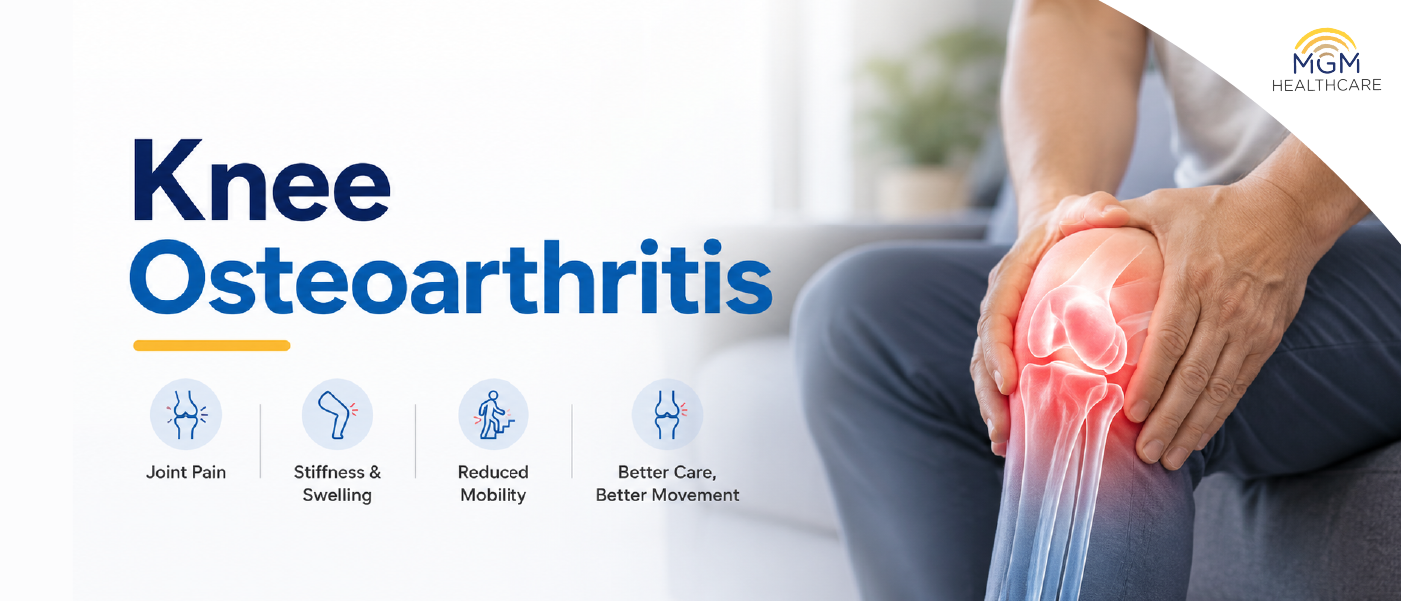
  • Knee osteoarthritis is a condition in which the protective cartilage inside the knee gradually wears away. As the cartilage becomes thinner, the bones rub against each other, leading to pain, stiffness, and reduced movement.

What Causes Knee Osteoarthritis?

  • Several factors can increase the risk, including:

    • Ageing
    • Excess body weight
    • Previous knee injuries
    • Family history
    • Repetitive stress on the knee
    • High-impact sports
    • Joint deformities

What Are the Symptoms of Knee Osteoarthritis?

  • Common symptoms include:

    • Knee pain during walking or climbing stairs
    • Morning stiffness
    • Swelling around the knee
    • Grinding or clicking sounds
    • Difficulty squatting
    • Reduced walking distance
    • Bow-legged appearance in advanced stages

How Is Knee Osteoarthritis Diagnosed?

  • Doctors usually diagnose knee osteoarthritis through:

    • Medical history
    • Physical examination
    • Standing X-rays
    • MRI (when needed)
    • Assessment of knee alignment and stability

    Early diagnosis can help guide treatment before symptoms worsen.

Can Knee Osteoarthritis Be Treated Without Surgery?

  • Yes. Many people find relief with non-surgical treatment, especially in the early stages.

    Treatment may include:

    Lifestyle Changes

    Maintaining a healthy weight can reduce pressure on the knee joints.

    Physiotherapy

    Exercises help strengthen the muscles around the knee and improve stability.

    Medicines

    Pain-relieving and anti-inflammatory medicines may help control symptoms under medical supervision.

    Knee Injections

    Some patients may benefit from injections depending on the severity of arthritis.

When Is Knee Replacement Surgery Needed?

  • Surgery may be recommended if:

    • Pain continues despite treatment
    • Walking becomes difficult
    • Daily activities are affected
    • Sleep is disturbed by knee pain
    • X-rays show advanced joint damage

    Your orthopaedic surgeon will discuss whether knee replacement is appropriate for your condition.

How Has Knee Replacement Surgery Improved?

  • Modern technology has made knee replacement more accurate and patient-focused.

    At MGM Healthcare, suitable patients may benefit from:

    • Robotic-assisted knee replacement
    • Personalised surgical planning
    • Advanced implant technology
    • Faster rehabilitation
    • Improved pain management
    • Minimally invasive techniques where appropriate

    These advancements help improve joint alignment and support recovery.

What Is Recovery Like After Knee Replacement?

  • Recovery varies from person to person.

    Many patients:

    • Begin walking with support within 24 hours
    • Walk independently in a few weeks
    • Return to office work in about 4 to 6 weeks
    • Continue improving over several months with rehabilitation

    Following your rehabilitation programme is an important part of recovery.

Can Knee Osteoarthritis Be Prevented?

  • Although ageing cannot be prevented, healthy habits may reduce the risk.

    • Maintain a healthy weight
    • Stay physically active
    • Strengthen your thigh muscles
    • Avoid repeated strain on the knees
    • Treat knee injuries promptly
    • Wear supportive footwear

Why Choose MGM Healthcare for Knee Osteoarthritis Treatment?

  • At MGM Healthcare, patients receive comprehensive care from experienced orthopaedic specialists. Treatment plans are tailored to each individual’s condition and may include lifestyle guidance, physiotherapy, pain management, advanced imaging, and robotic-assisted knee replacement when appropriate.

    The focus is to reduce pain, improve movement, and help patients return to their daily activities with confidence.

Key Takeaways

    • Knee osteoarthritis is one of the most common causes of long-term knee pain.
    • Early diagnosis can help slow disease progression.
    • Many patients improve with non-surgical treatment.
    • Advanced arthritis may require knee replacement surgery.
    • Modern treatment options, including robotic-assisted surgery, can support better recovery in suitable patients.

Frequently Asked Questions

What is knee osteoarthritis?

Knee osteoarthritis is the gradual wear of cartilage in the knee joint, leading to pain, stiffness, and reduced movement.

Can knee osteoarthritis be treated without surgery?

Yes. Lifestyle changes, physiotherapy, medicines, and injections may help many patients manage their symptoms.

When should I consider knee replacement?

Knee replacement may be recommended when pain persists despite treatment and affects daily activities.

Is robotic knee replacement better?

Robotic-assisted surgery helps surgeons improve precision and alignment. Your doctor will determine whether it is suitable for your condition.

Can losing weight help knee arthritis?

Yes. Maintaining a healthy weight can reduce stress on the knee joints and may improve symptoms.