Our Health information will help you stay up to date on what is happening in health care. We bring you news/information/perspectives around health care innovations, preventive medicine, early diagnosis, nutrition and diet, women’s health, men’s health, children’s health, latest technologies, treatments and surgeries, diseases and conditions, fitness and more.

Kidney stones can develop even in young adults who otherwise consider themselves healthy. Low fluid intake, high sodium intake, certain dietary patterns, family history, obesity, digestive conditions and some metabolic or urinary disorders can all increase the risk.
For many young adults, one of the most important modifiable factors is not drinking enough fluids, especially during hot weather, exercise or activities that cause heavy sweating. However, kidney stones do not have a single cause, and prevention should ideally be based on the type of stone and the person’s individual risk factors.
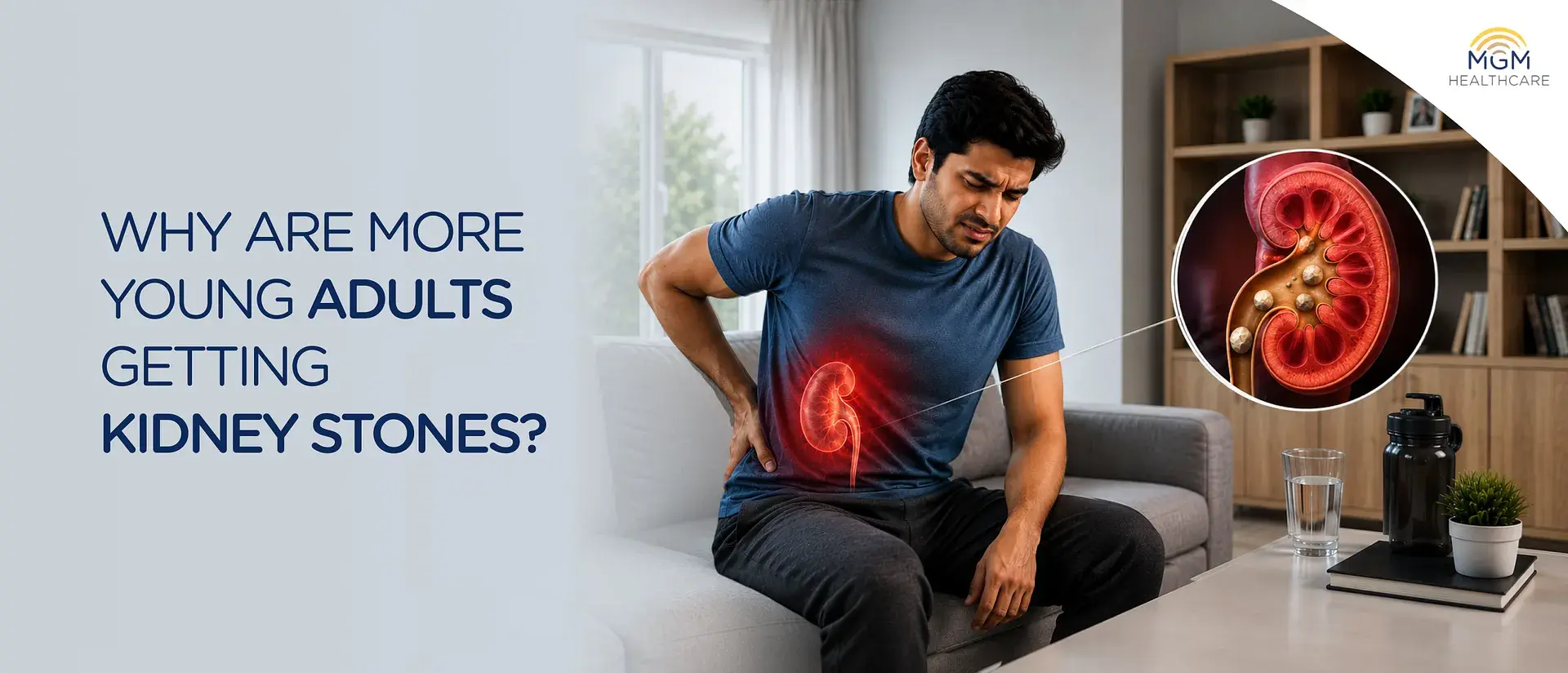
Kidney stones are hard deposits that form when certain substances in urine become concentrated enough to form crystals.
Urine naturally contains minerals and other substances. Under certain conditions, some of these substances can crystallise and gradually form stones.
Kidney stones can vary considerably in size. A small stone may pass through the urinary tract, while a larger stone may become lodged and obstruct the flow of urine.
Kidney stones include:
Knowing the type of kidney stone can be useful because prevention strategies differ according to the stone type and underlying cause.
There is usually no single explanation. Kidney stones can result from a combination of hydration, diet, genetics, medical conditions and environmental factors.
Research indicates that kidney stone disease has been increasing in younger populations, although trends vary between populations and regions.
For an individual patient, the more useful question is therefore not simply “Why are young people getting stones?” but:
“What factors may be causing my kidney stone?”
Here are some of the important possibilities.
Low fluid intake is one of the most important modifiable kidney stone risk factors.
When you do not drink enough fluid, urine becomes more concentrated. This makes it easier for minerals and other substances to reach concentrations at which crystals may form.
Your fluid needs can also increase when you:
For people living in warm climates or exercising regularly, replacing fluids lost through sweating is particularly important.
NIDDK identifies drinking enough liquid—mainly water—as one of the most important measures for preventing kidney stones.
A high-sodium diet can increase the risk of certain kidney stones.
Higher sodium intake can increase calcium in the urine, which may contribute to calcium-containing stone formation in susceptible people.
Common sources of high sodium intake include:
This does not mean that salt alone causes every kidney stone. Dietary recommendations should consider the type of stone and the individual’s health.
Higher intake of animal protein may increase the likelihood of certain kidney stones in people who are susceptible.
Animal protein sources can include:
However, this does not mean everyone with kidney stones should eliminate animal protein.
The amount and type of protein appropriate for you depend on your nutritional requirements, health conditions and stone type.
Crash diets and highly restrictive eating patterns can sometimes create problems if they result in:
Rather than following a generic “kidney stone diet,” prevention should be personalised according to your stone type and risk factors.
This is particularly important because the dietary advice for one type of stone may not be identical to the advice for another.
Hot conditions do not directly create a kidney stone overnight.
The concern is fluid loss.
If you sweat heavily and do not adequately replace lost fluids, your urine may become more concentrated.
This makes hydration particularly relevant for:
Kidney stones can run in families.
If a close family member has had kidney stones, your own risk may be higher. Some inherited disorders can also contribute to particular types of stones.
A strong family history becomes particularly relevant when kidney stones occur repeatedly or at a very young age.
Lifestyle is only one part of the picture.
Kidney stone risk can also be influenced by conditions involving the urinary tract, digestive system or metabolism.
Examples may include:
Some medicines and supplements may also affect stone risk in certain people.
If you develop recurrent stones despite following healthy habits, further evaluation may help identify an underlying cause.
Yes. A person can appear healthy and still develop a kidney stone.
Someone who exercises, maintains a healthy weight and has no known chronic illness may still have factors such as:
So developing a kidney stone does not necessarily mean that you have been living an unhealthy lifestyle.
It does, however, provide a reason to understand why the stone developed, particularly if stones recur.
Kidney stones may cause symptoms when they move through the urinary tract or interfere with urine flow.
Common kidney stone symptoms include:
NIDDK lists sharp back, side, lower abdominal or groin pain, blood in the urine and urinary symptoms among common signs of kidney stones.
Severe pain or symptoms suggesting infection or urinary obstruction require prompt medical assessment.
Seek medical attention urgently if you have kidney stone symptoms together with:
A urinary obstruction associated with infection can become serious and requires urgent medical treatment.
Kidney stones are diagnosed using your symptoms and medical history together with appropriate urine, blood and imaging tests.
Your doctor may ask about:
Depending on your situation, evaluation may include:
Testing helps determine the size, location and possible cause of the stone and whether it is blocking the urinary tract.
Treatment depends on the stone’s size and location, your symptoms, the likelihood of the stone passing and whether infection or urinary obstruction is present.
A small stone may sometimes pass without a procedure.
Treatment may include, depending on the individual case:
Larger stones, stones causing obstruction, or stones associated with complications may require procedural treatment.
Do not attempt to treat severe kidney stone symptoms only by drinking large amounts of water. If you have severe pain, fever, vomiting or difficulty passing urine, seek medical assessment.
Good hydration is one of the most important preventive measures, but the best prevention plan depends on the type and cause of the kidney stone.
Practical steps may include:
Drink Enough Fluids
Drink regularly throughout the day and pay particular attention to fluid replacement during hot weather or physical activity.
Your appropriate fluid intake may differ if you have kidney, heart or other medical conditions, so follow your doctor’s advice where applicable.
Reduce Excess Sodium
Cut back on frequent high-sodium processed and packaged foods.
Don’t Unnecessarily Restrict Calcium
Having a calcium kidney stone does not automatically mean you should remove calcium from your diet.
Adequate dietary calcium can be important, and NIDDK specifically advises getting enough calcium from foods for people with relevant calcium stones.
Do not significantly restrict dietary calcium unless your healthcare professional advises you to.
Review Your Protein Intake
If your diet contains large amounts of animal protein, discuss whether changes are appropriate for your stone type and overall nutritional needs.
Maintain a Healthy Weight
Being overweight is associated with a higher risk of kidney stones.
Aim for sustainable weight management rather than crash dieting.
Find Out What Type of Stone You Had
If you pass or have a stone removed, stone analysis may provide useful information.
Knowing whether it is a calcium oxalate, calcium phosphate, uric acid, cystine or another type of stone can help guide prevention.

Both urologists and nephrologists may be involved in kidney stone care, but their roles are different.
A urologist generally evaluates and treats stones that are causing pain, obstruction or other urinary-tract problems and performs procedures when a stone needs to be removed.
A nephrologist may be particularly helpful when there are recurrent stones, abnormal urine chemistry, metabolic causes or other kidney-related medical concerns.
Some patients benefit from care involving both specialties.
Consider specialist evaluation if you have:
“Kidney stones can occur even in young adults who otherwise appear healthy. Hydration, diet, family history and metabolic factors may all contribute. Understanding the likely cause is particularly important in people with recurrent stones or stones occurring at a young age, because prevention can often be tailored to the individual’s risk factors and stone type.”
Kidney stones are not limited to older adults or people with obvious health problems. Young, otherwise healthy adults can develop them too.
For some people, low fluid intake, high sodium intake or other dietary factors contribute. For others, family history, urine chemistry or an underlying medical condition may be more important.
That is why prevention should go beyond simply telling everyone to “drink more water.”
If you develop a kidney stone, particularly if stones recur the goal should be to understand what type of stone you have, why it may be forming and which preventive measures are appropriate for you.
Experiencing sudden or recurring symptoms that may be related to kidney stones?
At MGM Healthcare, specialists can evaluate kidney stone symptoms, determine the stone’s location and size, assess relevant risk factors and recommend treatment based on individual needs.
People with recurrent kidney stones may also benefit from evaluation to understand possible causes and ways to reduce the risk of future stones.
Consult the appropriate MGM Healthcare specialist if you have persistent kidney stone symptoms or want to understand your risk of recurrence.
Kidney stones can occur in young adults, and evidence indicates that stone disease has increased in younger populations over time. However, the exact burden and trends vary by age, geography and population.
Not drinking enough fluids can increase kidney stone risk. Lower fluid intake makes urine more concentrated, which can make stone-forming substances more likely to crystallise.
Yes. Kidney stones can develop in otherwise healthy people because of factors such as hydration, diet, family history, urine chemistry or underlying metabolic conditions.
It depends on the type of stone. High sodium intake and excessive animal protein can contribute to certain stones, while people with some calcium oxalate stones may need personalised advice about high-oxalate foods. There is no single diet appropriate for every kidney stone patient.
Not automatically. Getting an appropriate amount of calcium from food can actually be important for people with certain calcium stones. Significant calcium restriction should not be started without professional advice.