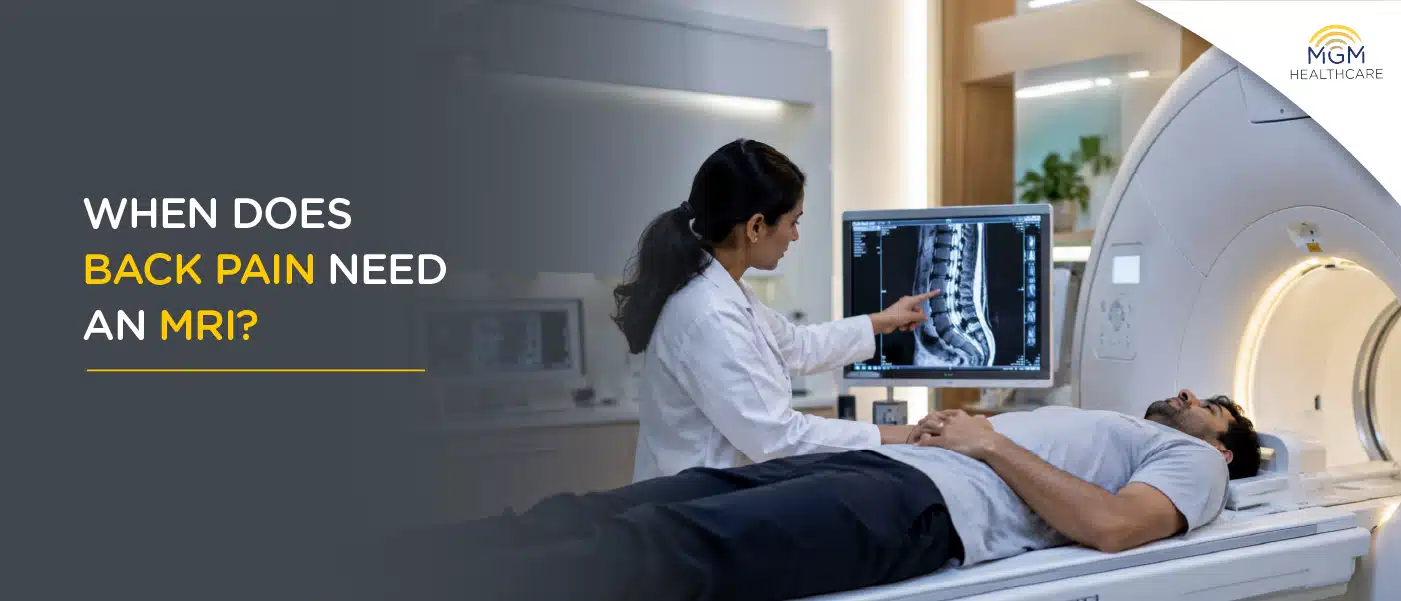
When Does Back Pain Need an MRI? Signs to Know When Does Back Pain Need an MRI? Signs to Know

When Does Back Pain Need an MRI? Signs and Symptoms to Know Wed , Oct 28

An MRI may be recommended for back pain that persists despite appropriate treatment, causes concerning nerve-related symptoms or raises suspicion of a serious spinal condition. Most uncomplicated back pain does not need immediate imaging. A doctor decides whether an MRI is appropriate based on the examination, medical history and whether the results could change treatment.

When Should You Get an MRI for Back Pain?

Your doctor may consider an MRI when you have:

  • Persistent back pain: Symptoms that continue despite appropriate treatment and need further investigation.
  • Pain spreading into your leg: Particularly when accompanied by tingling, numbness or weakness.
  • Changes in muscle strength or sensation: Findings that may indicate a problem affecting the spinal nerves.
  • A significant injury: When examination suggests damage to structures within or around the spine.
  • Possible infection or another serious condition: When your symptoms or medical history raise specific concerns.

These symptoms do not automatically mean you need an MRI. The decision depends on the findings of your medical assessment.

Back Pain Warning Signs: When to Seek Emergency Care

Seek emergency medical care immediately if you develop any of the following:

  • New difficulty passing urine or loss of bladder control.
  • Loss of bowel control.
  • Numbness around the groin, inner thighs or buttocks.
  • Severe or rapidly worsening weakness in one or both legs.

These symptoms may indicate serious compression of nerves in the lower spine, including cauda equina syndrome. Prompt assessment is essential. Do not wait for a routine appointment.

What Can an MRI Show?

MRI uses magnetic fields and radio waves to produce detailed images of the spine and surrounding soft tissues. Depending on the suspected problem, it may help doctors investigate:

  • Herniated disc: A spinal disc protrudes and may irritate a nearby nerve.
  • Nerve compression: Pressure on a nerve that may contribute to pain, tingling, numbness or weakness.
  • Spinal stenosis: Narrowing within the spine that may affect the nerves or spinal cord.
  • Certain serious conditions: Including suspected infection, tumours or problems involving the spinal cord.

MRI findings must be interpreted alongside your symptoms and examination. An abnormality on a scan does not necessarily mean it is responsible for your pain.

Does Every Case of Back Pain Need an MRI?

No. Imaging is not routinely recommended for uncomplicated back pain when there are no warning signs suggesting a serious condition.

Depending on your symptoms, your doctor may initially recommend appropriate activity, exercises or physiotherapy and other suitable treatment. If your condition does not improve, worsens or develops new symptoms, further assessment may be necessary.

An MRI is most useful when its findings are likely to influence treatment decisions. This approach helps avoid unnecessary scans and the confusion that can arise from finding spinal changes unrelated to the pain.

MRI vs X-Ray for Back Pain

The main difference is the type of structure each test shows.

MRI X-ray
Provides detailed images of discs, nerves and soft tissues. Primarily shows bones and spinal alignment.
May be used to investigate suspected nerve or spinal cord problems. May be used to investigate certain fractures or bone-related problems.
Does not use ionising radiation. Uses ionising radiation.

Your doctor will recommend the appropriate test based on the suspected condition and your clinical findings.

Get the Right Assessment for Your Back Pain

Back pain can have several causes, and not everyone needs an MRI. If your symptoms persist, spread into your legs or affect your strength or sensation, seek medical advice to understand the cause and appropriate next steps.

Consult a qualified spine specialist for an individual assessment. If emergency warning signs develop, seek immediate medical care.

Medical disclaimer: This article is for educational purposes and does not replace professional medical advice.

Medical references

Frequently Asked Questions

How long should back pain last before an MRI is considered?

There is no single timeframe for everyone. Doctors consider the duration of pain, response to treatment and presence of warning signs. An MRI may be considered sooner if a serious condition is suspected.

Can an MRI detect a slipped disc?

Yes. MRI can show a herniated disc and help doctors assess whether it may be affecting nearby nerves. The findings must be compared with your symptoms.

Does sciatica always require an MRI?

No. Many cases can initially be managed without imaging. An MRI may be considered if symptoms persist, worsen or suggest a condition that could change treatment.

Is an MRI necessary for severe back pain?

Not always. Severe pain needs medical assessment, but the decision to order an MRI depends on the suspected cause and associated symptoms.

Which doctor should I consult for persistent back pain?

Consult a qualified healthcare professional for an assessment. Depending on the findings, you may be referred to a spine specialist or another appropriate specialist.

Enquire Now

Fill the form and our team will get back to you within 24 hours