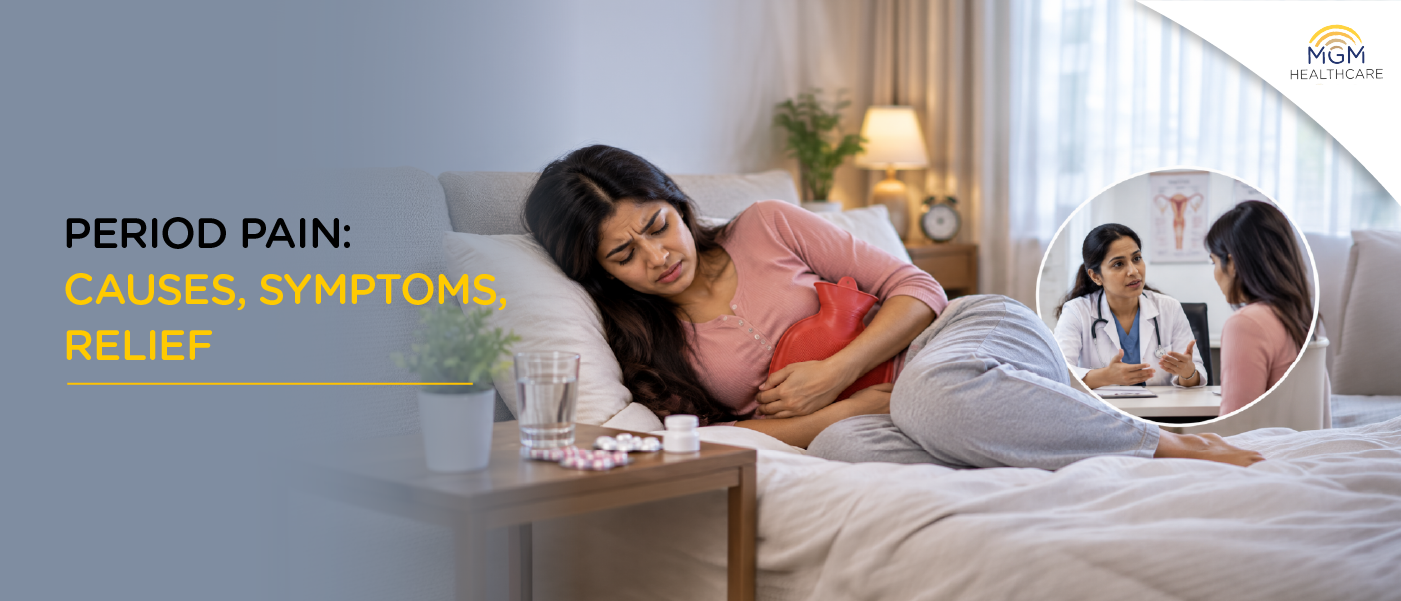
Period pain, also known as dysmenorrhoea, is cramping in the lower abdomen that occurs before or during menstruation. It is commonly caused by uterine contractions. While mild cramps are common, severe or worsening pain may indicate an underlying condition such as endometriosis or uterine fibroids.
Medically Reviewed by: Dr. A. Jaishree Gajaraj, MBBS, DGO, MD (Obstetrics & Gynaecology), FRCOG
Head of Obstetrics and Gynaecology, MGM Healthcare, Chennai
Medical review date: To be completed after the doctor’s final approval
Period pain occurs when the uterus contracts to shed its lining during menstruation. The body produces hormone-like substances called prostaglandins, which trigger these contractions. Higher prostaglandin levels can cause stronger contractions and more intense cramps.
There are two main types:
Primary dysmenorrhoea: Menstrual pain without an underlying pelvic condition. It commonly occurs around the beginning of menstruation.
Secondary dysmenorrhoea: Pain caused by an underlying condition such as endometriosis, adenomyosis or uterine fibroids.
Period pain can range from mild discomfort to severe cramps that affect everyday activities.
Common symptoms include:
Symptoms can vary between individuals. Severe or persistent pain should not be dismissed as normal menstrual discomfort.
Period pain usually begins shortly before or at the start of menstruation. It is often strongest during the first 24 hours and generally improves within two to three days.
The pain is commonly felt in:
Lower abdomen: Cramping below the belly button.
Lower back: Dull or aching discomfort.
Upper thighs: Pain spreading from the pelvic region.
Pelvic area: Discomfort that may sometimes continue beyond menstruation.
Pain that continues after your period, becomes progressively worse or occurs between menstrual cycles needs medical evaluation.
Mild menstrual cramps can often be managed with simple self-care measures.
1. Apply Heat
Use a warm water bottle or heating pad over your lower abdomen. Gentle heat may help relax the muscles and ease cramps. Keep a cloth between the heat source and your skin.
2. Try Gentle Exercise
Walking, stretching and gentle yoga may help some women manage menstrual discomfort. Choose activities according to your comfort level.
3. Get Enough Rest
Maintain a regular sleep routine and allow yourself time to rest when experiencing menstrual discomfort.
4. Stay Hydrated
Drink sufficient water throughout the day. Warm drinks may feel soothing, although they do not treat the underlying cause of period pain.
5. Consider Suitable Pain Relief
Medicines such as ibuprofen may help reduce menstrual cramps by lowering prostaglandin production. However, they are not suitable for everyone. Consult a healthcare professional before using them, particularly if you have other medical conditions or may be pregnant.
6. Maintain a Balanced Lifestyle
Regular physical activity, nutritious meals and adequate sleep support overall well-being and may help with symptom management.
If these measures do not provide relief, consult a gynaecologist rather than relying only on home remedies.

Sometimes, painful periods are associated with underlying gynaecological conditions.
Endometriosis: Tissue similar to the uterine lining grows outside the uterus. It may cause severe menstrual cramps, persistent pelvic pain and pain during intercourse.
Adenomyosis: Tissue similar to the uterine lining grows into the muscular wall of the uterus. It may cause painful periods and heavy menstrual bleeding.
Uterine Fibroids: These are non-cancerous growths in or around the uterus. Depending on their size and location, they may cause heavy periods, pelvic pressure and menstrual discomfort.
Ovarian Cysts: Fluid-filled sacs that develop on or inside an ovary. Some may cause pelvic discomfort, while sudden severe pain requires urgent assessment.
Pelvic Inflammatory Disease (PID): An infection affecting the female reproductive organs that may cause lower abdominal pain, fever and unusual vaginal discharge.
These conditions can have overlapping symptoms. A gynaecologist can assess your symptoms and recommend appropriate investigations.
Mild menstrual cramps are common, but certain symptoms require medical evaluation.
Consult a gynaecologist if you experience:
When is pelvic pain an emergency?
Seek urgent medical attention for sudden severe pelvic pain, fainting, fever with pelvic pain, heavy bleeding accompanied by feeling unwell, or severe pain when pregnancy is possible.
A gynaecologist will review your menstrual history, symptoms and medical background to understand the possible cause.
Depending on the findings, investigations may include:
A normal ultrasound does not always rule out endometriosis. Further specialist evaluation may be necessary if symptoms persist.
Treatment depends on the diagnosis and individual health needs. Options may include:
Your gynaecologist will recommend treatment based on your symptoms, diagnosis and reproductive health needs.
At MGM Healthcare, women can access comprehensive women’s healthcare services at Varam, including specialist consultations and diagnostic support
Recurring menstrual cramps or persistent pelvic discomfort deserve proper medical attention.
At MGM Healthcare, Chennai, the Obstetrics and Gynaecology team provides evaluation and management for menstrual concerns, pelvic pain and other reproductive health conditions.
Dr. A. Jaishree Gajaraj, Head of Obstetrics and Gynaecology, is part of the specialist team at MGM Healthcare.
If period pain is affecting your everyday life, consult a gynaecologist to understand its cause and explore suitable treatment options.
Book an appointment with the Obstetrics and Gynaecology team at MGM Healthcare, Chennai.
Period cramps occur when the uterus contracts to shed its lining. Prostaglandins trigger these contractions, and higher levels can cause stronger and more painful cramps.
Period pain commonly lasts up to three days and is often strongest during the first 24 hours. Persistent pain beyond menstruation should be evaluated.
A warm compress, gentle movement, adequate hydration and rest may help ease menstrual cramps. Consult a healthcare professional if the pain is severe or persistent.
Worsening cramps may be associated with conditions such as endometriosis, adenomyosis or uterine fibroids. A gynaecological assessment can help identify the cause.
Not all painful periods indicate endometriosis. However, severe cramps, chronic pelvic pain, painful intercourse or pain during bowel movements may require evaluation for this condition.
Consult a gynaecologist if period pain is severe, affects daily activities, becomes progressively worse or occurs between periods. Sudden severe pelvic pain requires urgent medical attention.
It depends on the cause. Primary menstrual cramps can often be managed, while period pain caused by an underlying condition may require condition-specific treatment.
Consult a gynaecologist if period pain is severe, progressively worsening, persistent or affecting your everyday activities. Heavy bleeding and pelvic pain between periods also need assessment.