Frequently Asked Questions
Can heavy lifting cause a hernia?
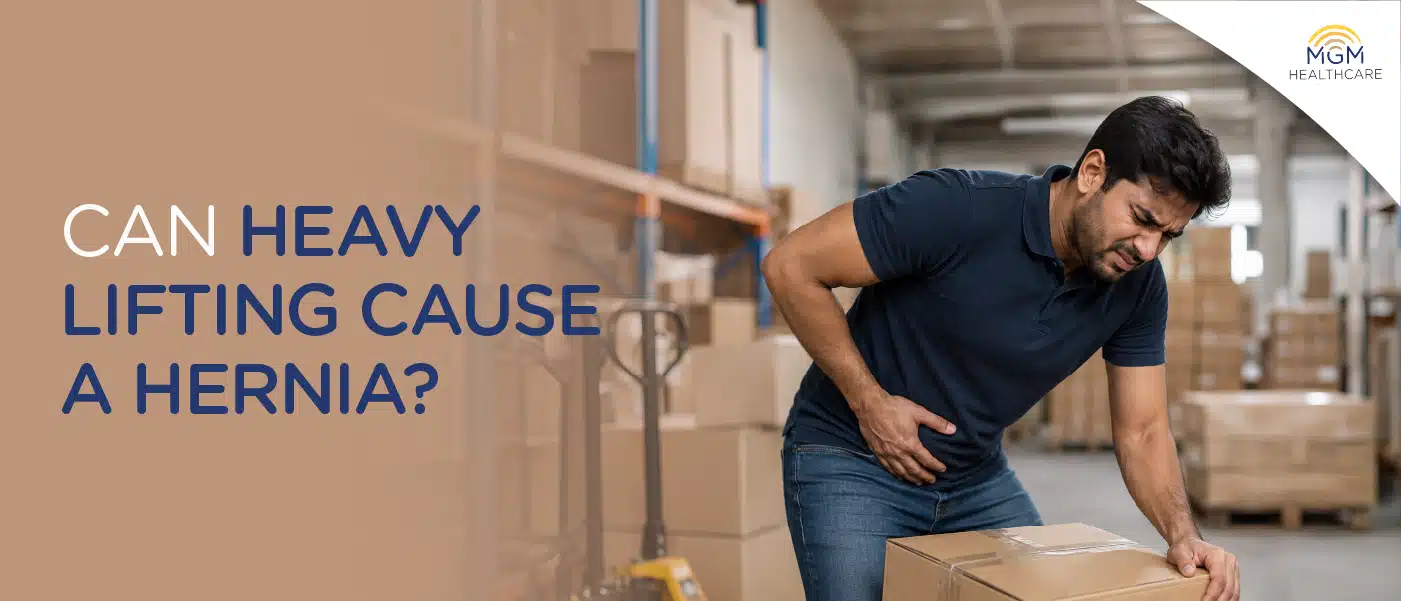
Heavy lifting can increase pressure inside the abdomen and may make a hernia develop or become noticeable when a weak area is already present.
What are the first signs of a hernia?
A lump or bulge in the groin or abdomen is a common sign. It may become more noticeable when standing, coughing, straining or lifting.
What does a hernia feel like?
A hernia may feel like a bulge accompanied by aching, pressure, heaviness or discomfort. Some hernias may initially cause no pain.
Can a hernia heal on its own?
Most hernias do not repair themselves without treatment. Depending on the type, size and symptoms, a doctor may recommend monitoring or surgical repair.
Can I exercise with a hernia?
It depends on the type and severity of the hernia. Avoid activities that cause pain or excessive straining and discuss your exercise routine with your doctor.
When should I see a doctor for a hernia?
See a doctor if you develop a new or persistent lump, abdominal or groin pain, or a bulge that becomes more noticeable with coughing, lifting or straining.
When is a hernia an emergency?
Sudden severe pain, repeated vomiting, difficulty passing stool or gas, or a firm and very tender bulge that cannot be pushed back requires urgent medical attention.



 In-person Consultation
 Online Video Consultation
 Preventive Health
 Treatment Enquiries
 Find a Doctor
 Access the Patient Portal
 +91 44 4524 2407
  Cardiac Sciences
 Gastro Sciences
 Minimal Access GI & Bariatric Surgery
 Heart & Lung Transplant
 Multi-Visceral and Abdominal Organ Transplant
 Liver Transplant
 Neurosurgery
 Neurology
 Spine Surgery
 Obstetrics and Gynaecology
 Orthopaedics
 Total Knee replacement
 Renal Sciences
 ENT, Head & Neck surgery
 Internal Medicine
 Anaesthesiology & SICU
 Emergency Medicine
 Radiology and Imaging Services
 Aesthetic & Plastic Surgery
 Dermatology
 Laboratory services & Blood Bank
 Maxillofacial & Dental Surgery
 Critical Care
 Opthamology
 Pain Management
 Pulmonology
 Rehabilitation Medicine
 Pediatrics and Neonatology
 Paediatric Cardiology
 Emergency Na MGM
 IVF
IVF Oncology Treatments
 Health Packages
 Healthcaring TV
 Healthcaring Stories
 Visitors
 Events
 Media
Media Health Information
 BMW Data
 Careers
 Contact Us
 About
About +91 44 4524 2407Appointment
 +91 44 4200 4200Emergency