Our Health information will help you stay up to date on what is happening in health care. We bring you news/information/perspectives around health care innovations, preventive medicine, early diagnosis, nutrition and diet, women’s health, men’s health, children’s health, latest technologies, treatments and surgeries, diseases and conditions, fitness and more.

Your kidneys work around the clock to keep your body healthy. They remove waste products, balance fluids and minerals, regulate blood pressure, and support the production of healthy red blood cells.
One of the biggest challenges with kidney disease is that it often develops silently. Many people have few or no symptoms until kidney function has already declined. Recognising the early warning signs and seeking timely medical care can help protect your kidneys and reduce the risk of long-term complications.
What are the early warning signs of kidney disease?
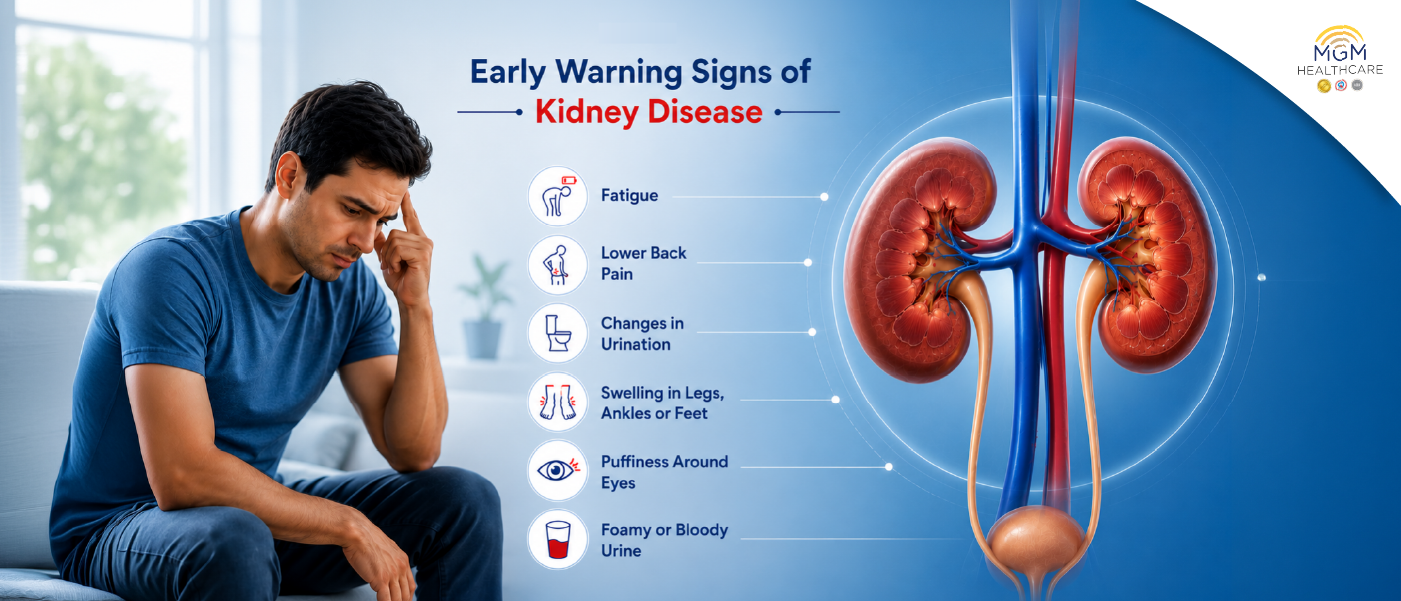
Early kidney disease may not cause obvious symptoms. As kidney function declines, you may notice swelling in your feet or face, changes in urination, foamy or bloody urine, persistent tiredness, muscle cramps, high blood pressure, or reduced urine output. If these symptoms persist, consult your doctor for further evaluation.
This guide may be helpful if you:
Kidney disease often develops gradually, and symptoms may not appear until kidney function begins to decline. Watch for these warning signs:
These symptoms do not always indicate kidney disease, but they should never be ignored.
| Healthy Kidneys | Possible Kidney Disease |
| Normal urine output | Frequent or reduced urination |
| No swelling | Swelling in the feet, ankles, or face |
| Clear urine | Foamy or bloody urine |
| Stable blood pressure | High blood pressure |
| Good energy levels | Persistent tiredness or weakness |
Your risk of kidney disease is higher if you:
People with recurrent kidney stones or urinary tract infections should also discuss kidney health with their doctor, as repeated episodes may affect kidney function.
Several conditions can damage the kidneys over time, including:
Early diagnosis and proper treatment of these conditions can help preserve kidney function.
If kidney disease is suspected, your doctor may recommend:
These investigations help determine kidney function, identify the underlying cause, and guide treatment.
Healthy lifestyle choices can help support kidney function and reduce the risk of kidney disease.
Consult your doctor if you experience:
Prompt medical evaluation can help identify kidney disease early and reduce the risk of complications.
“Kidney disease is often called a silent disease because symptoms may not appear until significant kidney damage has already occurred. Regular screening is particularly important for people with diabetes, high blood pressure, or a family history of kidney disease. Early diagnosis allows timely treatment and helps protect long-term kidney function.”
Dr. Sudharsan S B
Senior Consultant & Clinical Lead
Department of Urology
MGM Healthcare
At MGM Healthcare, our specialists provide comprehensive evaluation and personalised care for kidney and urinary tract conditions. Using advanced diagnostic technology and a multidisciplinary approach, we focus on early detection, accurate diagnosis, and evidence-based treatment to help preserve kidney health.
Our services include:
Dr. Sudharsan S B
Senior Consultant & Clinical Lead
Department of Urology
MGM Healthcare
Areas of Expertise
Concerned about your kidney health or experiencing symptoms such as swelling, changes in urination, or persistent fatigue?
Consult the specialists at MGM Healthcare for a comprehensive kidney health assessment, accurate diagnosis, and personalised treatment plan.
Early kidney disease may not cause symptoms. When symptoms develop, swelling, changes in urination, foamy urine, fatigue, and high blood pressure are common warning signs.
People with diabetes, high blood pressure, obesity, cardiovascular disease, a family history of kidney disease, or those over 60 years of age should discuss regular kidney health screening with their doctor.
Although not all kidney diseases can be prevented, controlling diabetes and blood pressure, maintaining a healthy lifestyle, avoiding smoking, and attending regular health check-ups can significantly reduce the risk.
Doctors diagnose kidney disease using blood tests, urine tests, kidney function tests such as eGFR, urine ACR, blood pressure assessment, and imaging studies like ultrasound when required.
Drinking enough water supports normal kidney function in most healthy individuals. However, people with existing kidney disease should follow their doctor’s advice regarding fluid intake.
Consult your doctor if you have persistent swelling, blood or foam in the urine, abnormal kidney function tests, reduced urine output, or ongoing symptoms suggestive of kidney disease.