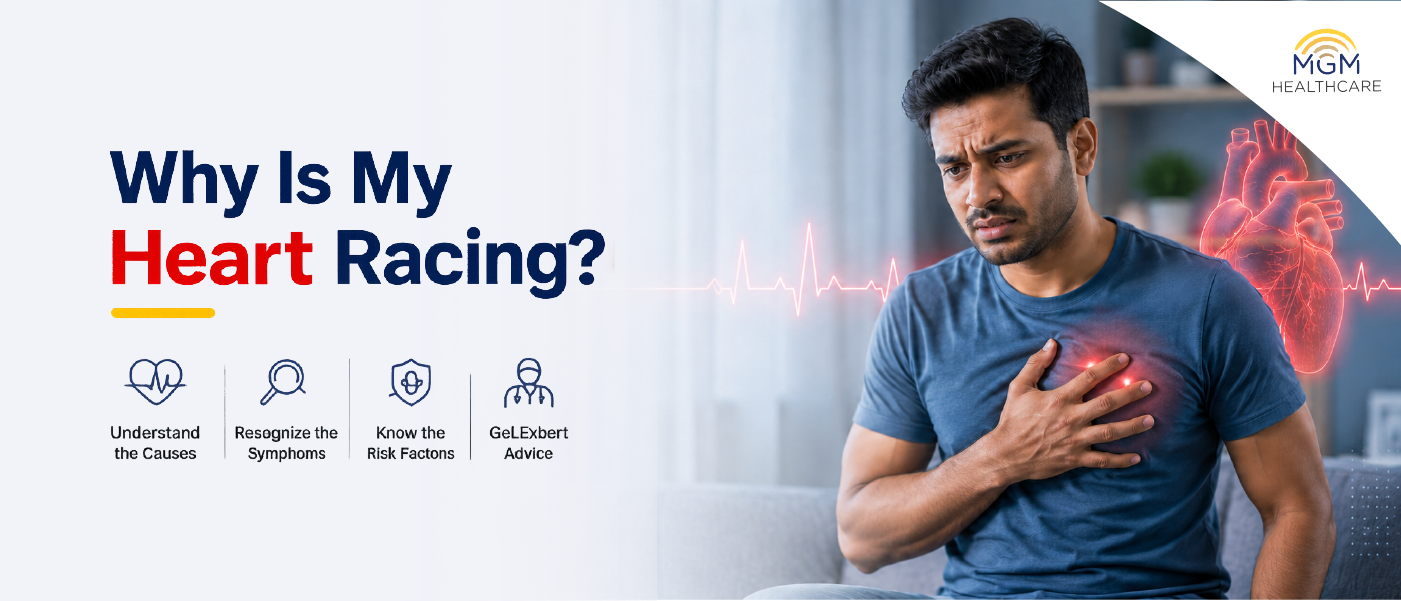
Why Is My Heart Racing? Causes of Heart Palpitations | MGM Healthcare Why Is My Heart Racing? Causes of Heart Palpitations | MGM Healthcare

Why Is My Heart Racing? Common Causes of Heart Palpitations Wed , Jul 15

About the Health Information

Our Health information will help you stay up to date on what is happening in health care. We bring you news/information/perspectives around health care innovations, preventive medicine, early diagnosis, nutrition and diet, women’s health, men’s health, children’s health, latest technologies, treatments and surgeries, diseases and conditions, fitness and more.


Popular Posts
Medical Emergency Mon , Dec 27
Shoulder Arthritis and its types

Quick Facts

    • Heart palpitations make your heart feel like it’s racing, fluttering, or skipping beats.
    • Stress, anxiety, caffeine, and lack of sleep are common triggers.
    • Some palpitations may be caused by heart rhythm disorders.
    • Most episodes are harmless, but frequent or severe symptoms should be checked by a doctor.
    • Seek emergency care if palpitations occur with chest pain, fainting, or difficulty breathing.

Introduction

  • Have you ever suddenly felt your heart beating faster than usual, fluttering, or skipping a beat?

    This feeling, known as heart palpitations, can be worrying. In many cases, it happens because of stress, caffeine, or lack of sleep. However, frequent or persistent palpitations may sometimes be linked to an underlying heart condition.

    Knowing what causes heart palpitations and when to seek medical care can help protect your heart health.

Why Does My Heart Feel Like It's Racing?

  • Heart palpitations are the feeling that your heart is beating too fast, too hard, fluttering, or missing a beat.

    They may last for a few seconds or several minutes and can happen while resting or during physical activity.

What Are Heart Palpitations?

  • Heart palpitations are an unusual awareness of your heartbeat.

    You may notice your heart:

    • Racing
    • Fluttering
    • Pounding
    • Skipping a beat
    • Beating harder than usual

    Although many palpitations are harmless, recurring episodes should be medically evaluated.

What Causes Heart Palpitations?

  • Heart palpitations can happen for many reasons.

    Lifestyle Factors

    Common lifestyle triggers include:

    • Stress or anxiety
    • Too much caffeine
    • Alcohol
    • Smoking
    • Lack of sleep
    • Dehydration

    Medical Conditions

    Certain health conditions may also cause palpitations, including:

    • Heart rhythm disorders (arrhythmias)
    • Thyroid disorders
    • Anaemia
    • Low blood sugar
    • Fever
    • Low blood pressure

    Medicines

    Some medicines and supplements can trigger palpitations, such as:

    • Asthma inhalers
    • Nasal decongestants
    • Certain prescription medicines
    • Herbal supplements

When Should Heart Palpitations Be a Concern?

  • Most heart palpitations are not dangerous.

    However, seek medical care immediately if they occur with:

    • Chest pain
    • Difficulty breathing
    • Dizziness
    • Fainting
    • Severe weakness
    • A very fast or irregular heartbeat

    These symptoms may require urgent medical attention.

Who Is More Likely to Experience Heart Palpitations?

  • You may have a higher risk if you:

    • Have high blood pressure
    • Have diabetes
    • Have thyroid disease
    • Have an existing heart condition
    • Experience chronic stress or anxiety
    • Consume large amounts of caffeine
    • Smoke
    • Have a family history of heart rhythm disorders

How Are Heart Palpitations Diagnosed?

  • Your cardiologist will ask about your symptoms and perform a physical examination.

    Depending on your condition, additional tests may include:

    • Electrocardiogram (ECG)
    • Echocardiogram
    • Holter monitor
    • Blood tests
    • Stress test

    These tests help identify the underlying cause.

How Are Heart Palpitations Treated?

  • Treatment depends on what is causing the palpitations.

    Your doctor may recommend:

    • Lifestyle changes
    • Managing stress and anxiety
    • Reducing caffeine and alcohol
    • Treating thyroid or other medical conditions
    • Medicines to control heart rhythm
    • Advanced cardiac procedures when needed

How Can You Reduce Heart Palpitations?

  • Simple lifestyle changes may help reduce episodes.

    • Stay physically active
    • Eat a heart-healthy diet
    • Drink enough water
    • Sleep for 7 to 8 hours
    • Limit caffeine and alcohol
    • Avoid smoking
    • Practise relaxation techniques
    • Attend regular heart check-ups if you have risk factors

When Should You See a Cardiologist?

  • Arrange a consultation if you:

    • Experience frequent palpitations
    • Have episodes lasting several minutes
    • Notice symptoms becoming more frequent
    • Have a history of heart disease
    • Feel that palpitations interfere with daily life

    Early evaluation helps identify the cause and allows timely treatment if needed.

Expert Insight

  • “Heart palpitations are often harmless, but they should not be ignored if they occur frequently or are accompanied by chest pain, breathlessness, dizziness, or fainting. Early assessment helps identify the cause and ensures appropriate treatment when necessary.”

    Dr Ankita Ajay Kulkarni

Key Takeaways

    • Heart palpitations are common and are often linked to lifestyle factors.
    • Stress, caffeine, and poor sleep are frequent triggers.
    • Some palpitations may indicate an underlying heart rhythm disorder.
    • Seek immediate medical care if palpitations occur with chest pain, fainting, or breathing difficulty.
    • Early diagnosis helps guide the right treatment.

About the Reviewer

  • Dr. Ankita Ajay Kulkarni
    Consultant
    Institute of Cardiac Sciences
    MGM Healthcare

Book an Appointment

  • If you frequently experience heart palpitations, a racing heartbeat, or an irregular heartbeat, consult Dr. Ankita Ajay Kulkarni and the Institute of Cardiac Sciences at MGM Healthcare.

    Early evaluation can help identify the cause and ensure you receive the right care for a healthier heart.

Frequently Asked Questions

Are heart palpitations always serious?

No. Many heart palpitations are harmless and are triggered by stress, caffeine, or lack of sleep. However, persistent or severe symptoms should be evaluated.

Can anxiety cause heart palpitations?

Yes. Anxiety and stress are common causes of heart palpitations.

Can caffeine make my heart race?

Yes. Drinking large amounts of caffeine may trigger palpitations in some people.

When should I worry about heart palpitations?

Seek medical attention if they occur with chest pain, breathlessness, dizziness, fainting, or if they become frequent.

Can heart palpitations be treated?

Yes. Treatment depends on the underlying cause and may include lifestyle changes, medicines, or specialised cardiac care.