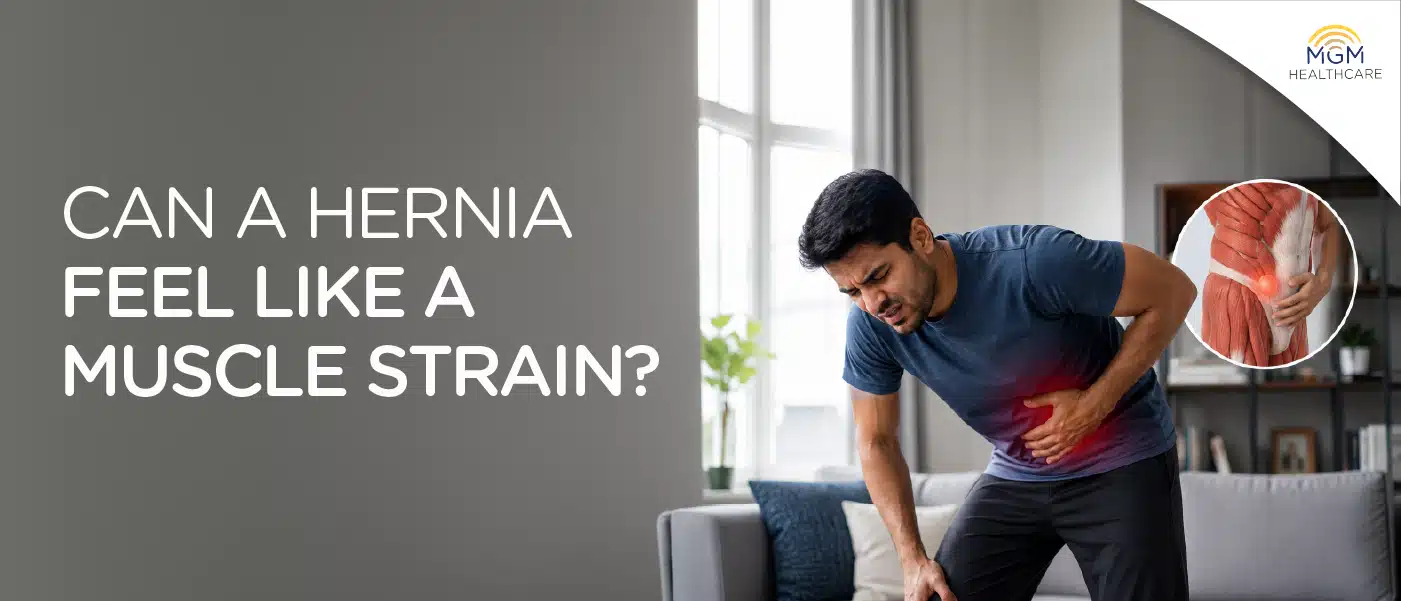
1. Pulling, Aching or Burning Sensation
A hernia may cause:
- Aching
- Pulling or tugging
- Burning
- Pressure
- Discomfort around the abdomen or groin
The discomfort may become more noticeable when you:
- Lift
- Bend
- Cough
- Sneeze
- Stand for long periods
- Strain during a bowel movement
Persistent or recurring discomfort should not automatically be attributed to a muscle strain.
2. A Lump or Bulge
A new lump or bulge is one of the most important signs that the problem may be a hernia rather than a simple muscle strain.
The bulge may:
- Become more noticeable when standing
- Appear when coughing or straining
- Become prominent during lifting or physical activity
- Reduce or disappear when lying down
A muscle strain would not typically cause a bulge that changes in this way.
3. Groin Discomfort
An inguinal hernia develops in the groin and may cause pain, pressure or discomfort in that area.
In some people, discomfort may extend into the scrotum. However, groin pain can also have several other causes, including muscle injuries and sports-related problems.
A proper medical evaluation is therefore important when symptoms persist.
4. Heaviness or Pressure
Not everyone with a hernia experiences sharp pain.
Some people describe the sensation as:
- Heaviness
- Pressure
- Dragging
- Fullness
- Mild aching that becomes worse with activity
These symptoms can be easy to overlook, particularly when they are mild or intermittent.
5. Symptoms That Keep Coming Back
A muscle strain may gradually improve with appropriate rest and recovery.
If discomfort repeatedly returns when you lift, cough, strain or exercise especially if there is also a bulge it may need further evaluation.



 In-person Consultation
 Online Video Consultation
 Preventive Health
 Treatment Enquiries
 Find a Doctor
 Access the Patient Portal
 +91 44 4524 2407
  Cardiac Sciences
 Gastro Sciences
 Minimal Access GI & Bariatric Surgery
 Heart & Lung Transplant
 Multi-Visceral and Abdominal Organ Transplant
 Liver Transplant
 Neurosurgery
 Neurology
 Spine Surgery
 Obstetrics and Gynaecology
 Orthopaedics
 Total Knee replacement
 Renal Sciences
 ENT, Head & Neck surgery
 Internal Medicine
 Anaesthesiology & SICU
 Emergency Medicine
 Radiology and Imaging Services
 Aesthetic & Plastic Surgery
 Dermatology
 Laboratory services & Blood Bank
 Maxillofacial & Dental Surgery
 Critical Care
 Opthamology
 Pain Management
 Pulmonology
 Rehabilitation Medicine
 Pediatrics and Neonatology
 Paediatric Cardiology
 Emergency Na MGM
 IVF
IVF Oncology Treatments
 Health Packages
 Healthcaring TV
 Healthcaring Stories
 Visitors
 Events
 Media
Media Health Information
 BMW Data
 Careers
 Contact Us
 About
About +91 44 4524 2407Appointment
 +91 44 4200 4200Emergency