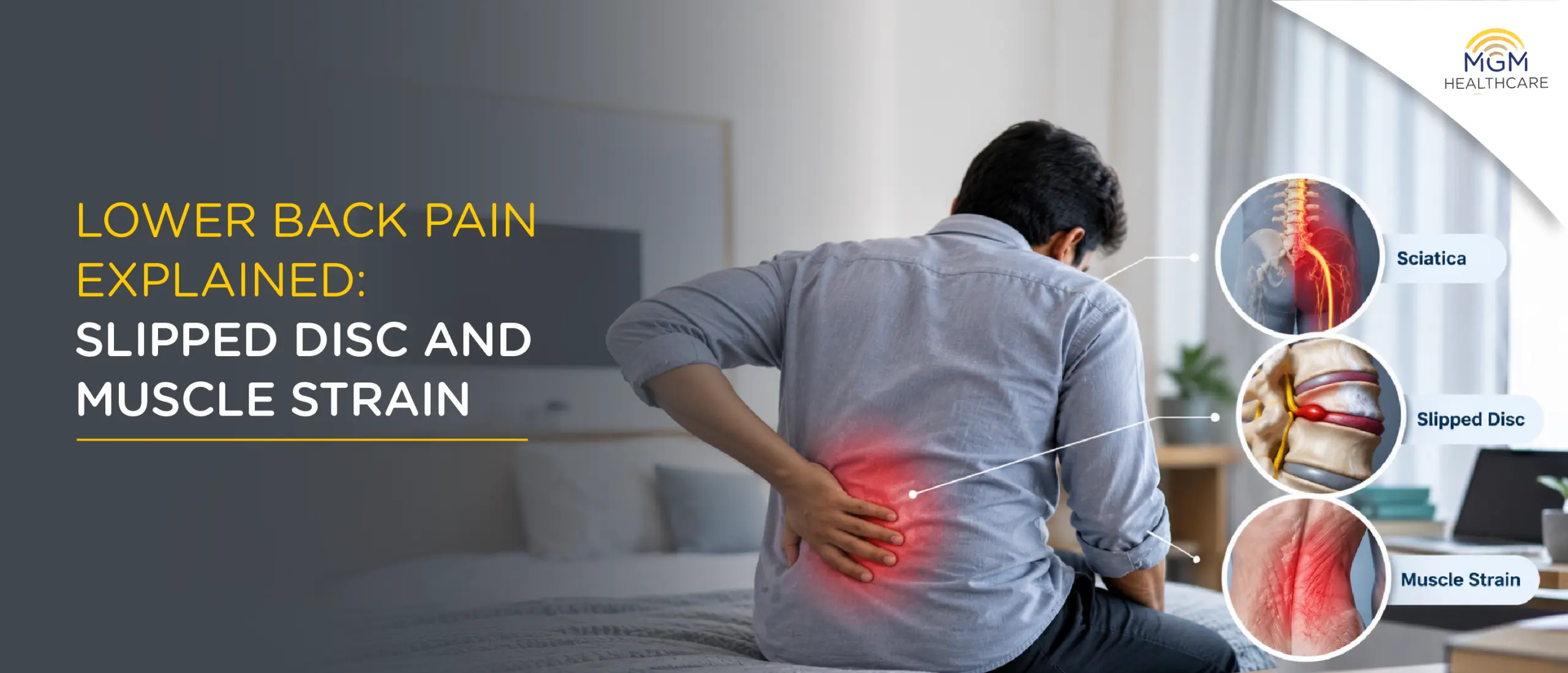
Lower back pain can make everyday activities such as walking, bending or sitting uncomfortable. The cause may be an injured muscle, a problem with a spinal disc or irritation of a nerve. Understanding where the pain starts, how it spreads and whether it affects movement can help you recognise when medical advice is needed.
These problems are not interchangeable. A herniated disc can trigger sciatica, while a muscle strain may occur without nerve involvement. A medical assessment is needed when symptoms are persistent, severe or accompanied by weakness or changes in sensation.
The lower back supports the body during movement and helps maintain posture. Sudden lifting, awkward twisting, strenuous exercise or repeated physical effort can injure the muscles or tendons in this area.
What might it feel like?
A strained back muscle may cause:
Symptoms may begin after a particular activity, although the exact cause is not always obvious.
What can help?
Many mild muscle strains improve with appropriate self-care. Gentle movement as tolerated and a gradual return to normal activities may help recovery. Avoid activities that significantly aggravate the pain.
If discomfort is severe, continues without improvement or limits normal movement, consult a healthcare professional rather than assuming it is only a muscle injury.
Spinal discs sit between the bones of the spine. They help absorb pressure and allow the back to bend and move.
A slipped disc, also called a herniated disc, occurs when material from a disc protrudes through its outer layer. Despite the common name, the disc does not simply slide out of position.
Some herniated discs cause no noticeable symptoms. In other cases, the affected disc may irritate a nearby nerve.
Signs that may occur
Depending on the location and severity of the problem, symptoms may include:
A disc problem does not automatically mean that surgery is required. Treatment depends on the symptoms, examination findings and whether nerve function is affected.
Sciatica develops when the nerves in the lower back that form the sciatic nerve become irritated or compressed. This can cause pain that travels from the lower back or buttock into one leg, sometimes reaching the foot.
Unlike pain that remains mainly in the lower back, sciatica often produces discomfort that travels from the buttock down one leg. It may reach the thigh, calf or foot.
How sciatica may feel
People may describe the pain as:
The symptoms can vary from person to person. Not everyone experiences all of them.
Sciatica is a description of nerve-related symptoms, not proof of a particular spinal condition. A herniated disc is one possible cause, but other problems can also irritate the nerve.
The pattern of discomfort can offer clues, although it cannot establish a diagnosis on its own.
Muscle strain
The pain is often concentrated around the lower back muscles. Bending, lifting or using the affected muscles may make the area more uncomfortable.
Herniated disc
Back pain may occur with symptoms extending into the buttock or leg, particularly when a nearby nerve is irritated. Some people have a herniated disc without experiencing any symptoms.
Sciatica
Pain commonly travels from the buttock down one leg and may be accompanied by tingling, numbness or weakness.
Remember: These conditions can overlap. Sciatica may result from a herniated disc, and back pain with leg symptoms can have causes other than either condition. A healthcare professional can assess the symptoms and decide whether further investigation is needed.
Back discomfort can develop after a specific incident or gradually over time. Possible contributing factors include:
Sometimes the cause is not immediately clear. The presence of back pain alone does not establish that a disc is damaged or a nerve is compressed.
Most back pain does not automatically indicate a medical emergency. However, certain symptoms should not be overlooked.
Pain spreading down the leg
Pain that moves from the lower back or buttock into the leg may indicate nerve irritation. Arrange a medical assessment if it persists, worsens or interferes with daily activities.
Changes in sensation
Tingling, numbness or reduced feeling in the leg or foot may occur when nerves are affected. New or progressive changes should be assessed by a healthcare professional.
Difficulty moving the leg or foot
Weakness that affects walking, standing or lifting the front of the foot needs prompt medical evaluation. Sudden or rapidly worsening weakness requires urgent assessment.
Pain that does not improve
Seek medical advice if the pain keeps returning, becomes more severe or makes routine activities difficult. Back pain following a significant injury also needs medical evaluation.
Bladder, bowel or groin symptoms
Seek emergency medical care immediately if back pain occurs with new loss of bladder or bowel control, difficulty passing urine or numbness around the groin, genitals or inner thighs. These symptoms may indicate serious compression of nerves in the lower spine and must not be ignored.

Your doctor will consider the history of your symptoms alongside the findings of a physical examination.
The assessment may include questions about when the pain began, what makes it worse, whether it travels into the leg and whether you have experienced numbness or weakness. Your doctor may also assess movement, sensation, muscle strength and reflexes.
Will you need an MRI?
Not everyone with back pain needs an MRI or another imaging test. Imaging may be considered when symptoms are persistent or severe, a significant nerve problem is suspected, or the results would affect treatment decisions.
The need for a scan depends on your symptoms and examination findings. Your doctor can explain whether imaging is appropriate for your situation.
Consider seeing a healthcare professional if you have:
Do not wait for a routine appointment if you develop emergency warning signs, such as new bladder or bowel control problems, numbness around the groin or rapidly worsening leg weakness.
Back pain can have several causes, and the symptoms do not always point to one condition. Pain that remains around the muscles may have a different explanation from pain that travels into the leg or affects sensation.
If your discomfort persists, affects your mobility or is accompanied by numbness or weakness, arrange a medical assessment. Identifying the likely cause can help guide appropriate care and reduce the risk of overlooking a more serious problem.
Medical references for editorial review
This article is for general health information and does not replace advice from a qualified healthcare professional. The medical content should be reviewed before publication.
Yes. A herniated disc is one possible cause of sciatica, but other conditions can irritate or compress the sciatic nerve or its roots.
A muscle strain usually causes pain around the injured muscle, while nerve-related pain may travel into the leg and cause tingling, numbness or weakness. However, symptoms can overlap, so an examination may be needed.
No. Many herniated discs can be managed without surgery. The appropriate treatment depends on symptom severity, nerve involvement and response to initial treatment. Some cases require more urgent specialist care.
Seek emergency medical attention if back pain occurs with new bladder or bowel control problems, difficulty passing urine, numbness around the groin or genitals, or rapidly worsening leg weakness.