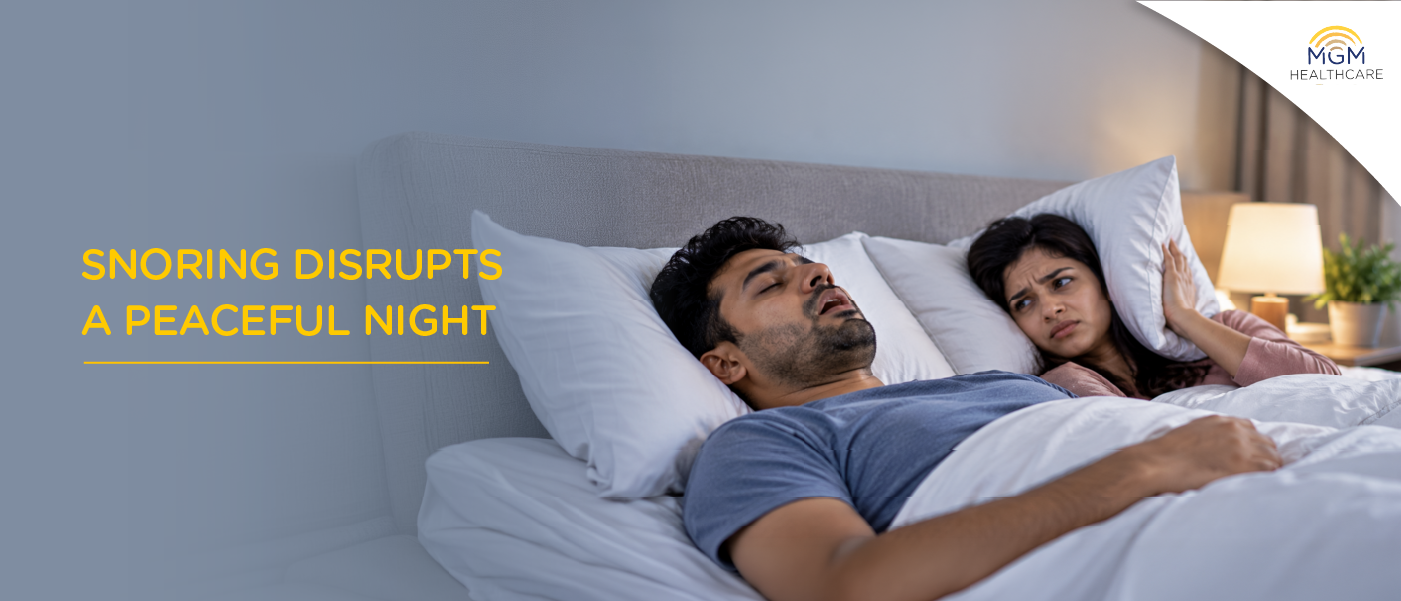
Occasional snoring is common, but loud, frequent snoring may sometimes indicate obstructive sleep apnoea (OSA), a condition in which breathing repeatedly becomes restricted or stops during sleep. If snoring occurs alongside gasping, witnessed breathing pauses or excessive daytime sleepiness, seek medical assessment to determine whether a sleep study is needed.
Snoring occurs when airflow through the nose or throat becomes restricted during sleep. As the surrounding tissues relax and narrow the airway, they vibrate and produce the familiar snoring sound.
Common factors that can make snoring worse include:
Occasional snoring does not necessarily indicate a medical problem. However, persistent, loud snoring deserves attention when other symptoms are present.
Obstructive sleep apnoea occurs when the upper airway repeatedly narrows or closes during sleep, temporarily reducing or stopping airflow. These interruptions can disturb sleep and affect oxygen levels.
Look out for these symptoms:
Snoring alone cannot confirm sleep apnoea. If you regularly snore and someone notices that your breathing stops during sleep, speak to a healthcare professional even if you do not feel particularly tired during the day.
Sleep apnoea can affect anyone, but certain factors increase the likelihood of developing it.
Common risk factors include:
Having one or more risk factors does not mean you definitely have sleep apnoea. A clinical assessment is needed to determine whether testing is appropriate.
Repeated interruptions to breathing can prevent you from getting restorative sleep. Over time, untreated sleep apnoea is associated with several health concerns, including:
If you feel dangerously sleepy during the day, avoid driving or operating machinery until you have received appropriate medical advice.
Your doctor may ask about your snoring, sleep patterns, daytime symptoms and medical history. Information from a partner or family member who has observed your sleep can also be useful.
If sleep apnoea is suspected, a sleep study may be recommended. Depending on your circumstances, this may be performed at home or in a sleep clinic. The test records breathing-related information and helps determine whether sleep apnoea is present and how severe it is.
Treatment depends on the severity of the condition, its underlying causes and your individual needs.
Your doctor may recommend:
Lifestyle changes may reduce snoring, but they are not a substitute for prescribed sleep apnoea treatment.
If your snoring is occasional and not associated with warning signs, some changes may help:
If these measures do not help, or your snoring is loud and accompanied by breathing pauses or daytime sleepiness, arrange a medical assessment.
Snoring may seem harmless, but frequent loud snoring accompanied by gasping, breathing pauses or daytime sleepiness can be a sign of sleep apnoea.
If you or someone close to you notices these symptoms, consult a healthcare professional. Early assessment can help identify the problem and guide appropriate treatment for better sleep and long-term health.
Medical disclaimer: This article is for general educational purposes and does not replace professional medical advice.
Medical references
No. Many people snore without having sleep apnoea. However, loud, frequent snoring accompanied by breathing pauses, gasping or excessive daytime sleepiness should be assessed.
Yes. Although snoring is common in obstructive sleep apnoea, its absence does not rule out the condition.
Common signs include pauses in breathing during sleep, gasping or choking, loud snoring, morning headaches and excessive daytime tiredness.
A doctor may recommend a home sleep test or an overnight study in a sleep clinic. The appropriate test depends on your symptoms and medical circumstances.
Yes. Treatment may include CPAP therapy, oral appliances and lifestyle changes. The most suitable approach depends on the diagnosis and severity.