Spine Surgery Guide: Types, Recovery Time & Success Rate - MGM Healthcare | Best Super-MultiSpecialty Hospital in Chennai Spine Surgery Guide: Types, Recovery Time & Success Rate - MGM Healthcare | Best Super-MultiSpecialty Hospital in Chennai

Spine Surgery: Types, Recovery Time, Success Rate, and Advanced Techniques Thu , Dec 19

About the Health Information

Our Health information will help you stay up to date on what is happening in health care. We bring you news/information/perspectives around health care innovations, preventive medicine, early diagnosis, nutrition and diet, women’s health, men’s health, children’s health, latest technologies, treatments and surgeries, diseases and conditions, fitness and more.


Popular Posts
Health Tips Wed , Apr 8
Six daily shoulder exercises for arthritic pain
Medical Emergency Mon , Dec 27
Shoulder Arthritis and its types
Health Tips Wed , Apr 8
Stress and how to beat it
Categories
  • Cancer
  • Cardiac Care
  • Children's Health
  • Covid-19
  • Diabetes
  • ENT
  • Health Emergencies
  • Health Tips
  • Hernia
  • Interventional Pulmonology
  • Kidney Stone
  • Medical Emergency
  • Men's Health
  • Neuro Care
  • Oral Cancer
  • Orthopaedics
  • Spine Care
  • Stroke
  • Transplants
  • Women's Health
  • World Brain Day
  • World Health Day
  • World Hearing Day
  • World Kidney Day
  • World Sleep day
  • World Vaccination Day

  • Spine surgery treats back and neck conditions that cause pain, nerve compression, and mobility issues using modern techniques such as endoscopic and minimally invasive procedures.

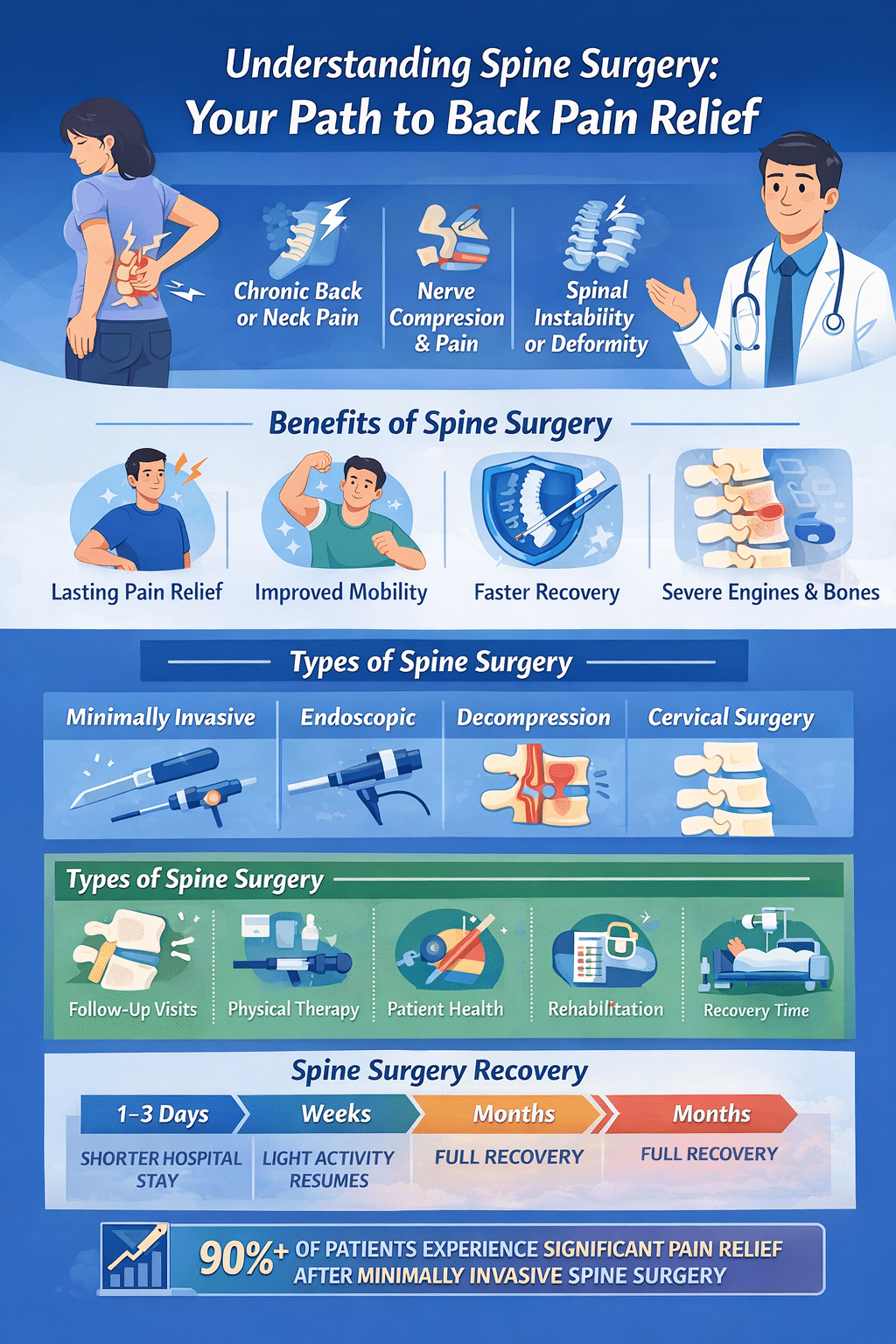
    Spine surgery is performed to treat conditions that cause chronic back or neck pain, nerve compression, and reduced mobility. This guide explains endoscopic spine surgery, minimally invasive techniques, standard procedures such as L4–L5 surgery, recovery time, the healing process, and success rates to help patients make informed decisions.

When Is Spine Surgery Recommended?

  • Spine surgery may be advised when non-surgical treatments such as medication, physiotherapy, or injections do not relieve symptoms.

    Common reasons include:

    • Persistent back or neck pain
    • Nerve compression causes weakness or numbness.
    • Spinal instability or degeneration
    • Reduced quality of life due to spinal disorders

Types of Spine Surgery

  • Minimally Invasive Spine Surgery

    Minimally invasive spine surgery uses smaller incisions to treat spinal conditions while reducing tissue damage, blood loss, and recovery time.

  • Endoscopic Spine Surgery

    Endoscopic spine surgery is an advanced technique where surgeons use a small camera and specialised instruments to treat spinal problems with minimal disruption to surrounding tissues.

  • Decompression Spine Surgery

    Decompression spine surgery relieves pressure on spinal nerves caused by conditions such as herniated discs or spinal stenosis.

  • Cervical Spine Surgery

    Cervical spine surgery focuses on treating disorders of the neck, including disc prolapse, nerve compression, and spinal instability.

Spine Surgery for L4–L5 Disc Problems

  • The L4–L5 level is one of the most commonly affected areas of the lower spine. Spine surgery at L4–L5 may be required when disc herniation or degeneration causes severe pain, numbness, or weakness in the legs.

Spine Surgery Recovery Time and Healing Process

  • Recovery after spine surgery depends on the type of procedure, patient health, and adherence to rehabilitation.

    Spine Surgery Recovery Time

    • Minimally invasive and endoscopic procedures often allow faster recovery.
    • Many patients resume light activities within weeks.
    • Complete recovery may take several months, depending on the surgery.

    Spine Surgery Healing Time

    Healing time refers to how long it takes tissues, bones, and nerves to fully recover. Proper physiotherapy, posture care, and follow-up visits play a key role>

What Is the Success Rate of Spine Surgery?

  • The spine surgery success rate varies depending on:

    • The condition being treated
    • The surgical technique used
    • Patient age and overall health
    • Post-surgical rehabilitation

    Modern minimally invasive and endoscopic techniques have demonstrated high success rates when performed for appropriate indications.

Benefits of Advanced Spine Surgery Techniques

  • Advanced spine surgery approaches aim to:

    • Reduce pain and nerve compression
    • Minimise tissue damage
    • Shorten hospital stays
    • Improve long-term mobility and quality of life.

    This is especially true for endoscopic and minimally invasive spine surgery.

Post-Surgery Care and Rehabilitation

  • Successful spine surgery outcomes depend on proper recovery care, including:

    • Regular follow-up consultations
    • Physical therapy and guided exercises
    • Gradual return to daily activities
    • Lifestyle and posture modifications

Conclusion

  • Spine surgery has advanced significantly with the introduction of endoscopic, minimally invasive, and robotic-assisted techniques. Understanding the different types of spine surgery, recovery time, healing process, and expected success rates helps patients make informed treatment decisions and achieve better outcomes.

Frequently Asked Questions About Spine Surgery

Is endoscopic spine surgery safe?

Endoscopic spine surgery is considered safe when performed by experienced spine surgeons and is associated with smaller incisions and faster recovery.

How long does it take to recover from spine surgery?

Spine surgery recovery time varies. Some patients recover within weeks, while others may need months, depending on the procedure and condition treated.

What is the success rate of spine surgery?

The success rate of spine surgery depends on the diagnosis, surgical method, and post-operative care. Many patients experience significant pain relief and improved mobility.

Is spine surgery for L4–L5 common?

Yes. Spine surgery at the L4–L5 level is commonly performed for disc herniation and degenerative changes in this area.

Does minimally invasive spine surgery reduce healing time?

Yes. Minimally invasive spine surgery often results in a shorter recovery time than traditional open surgery.