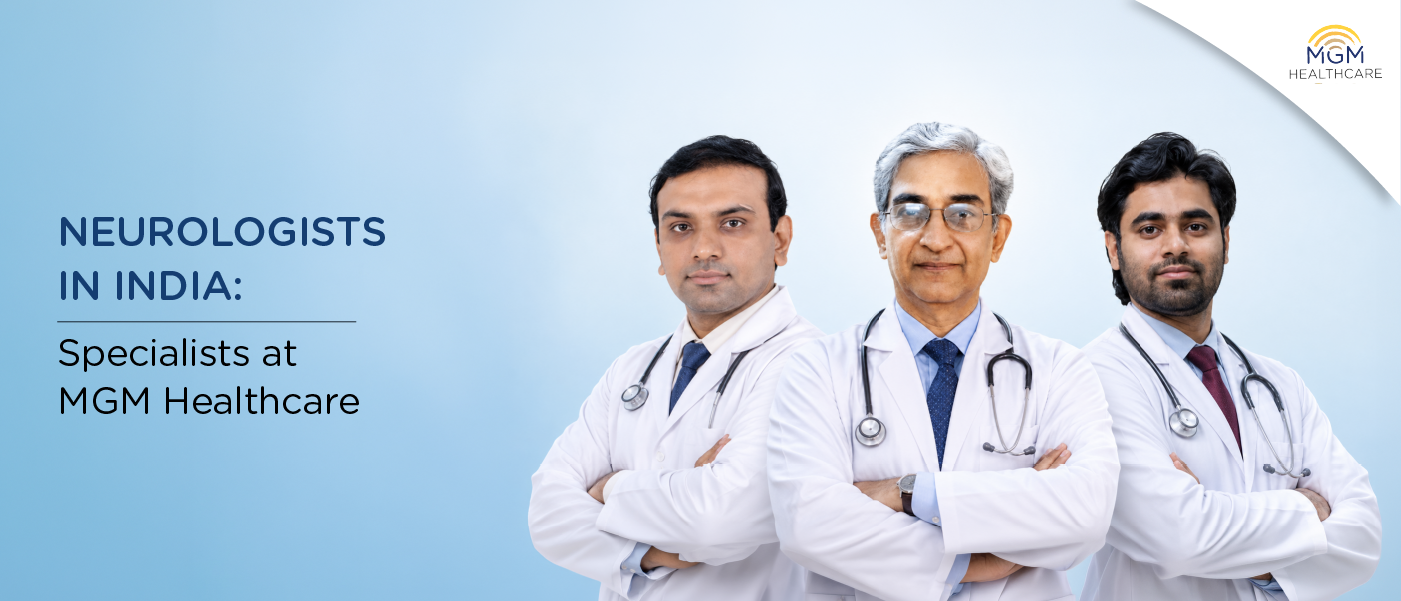
Finding the right neurologist is an important step when dealing with conditions affecting the brain, spinal cord or nerves. Patients searching for neurologists in India often want to understand a doctor’s qualifications, clinical expertise, areas of specialisation and hospital affiliation before making a decision. MGM Healthcare, Chennai, has a Department of Neurology with specialists who manage a range of neurological conditions. This guide introduces the doctors, explains what to consider when choosing a neurologist and helps patients understand the available specialist expertise.
MGM Healthcare’s Department of Neurology lists three specialists: Dr. D. Vasudevan, Dr. B. Gowri Shankar and Dr. Shrivarthan R. Each has a different academic background and clinical profile.
1. Dr. D. Vasudevan
Clinical Lead & Senior Consultant – Neurology
Dr. D. Vasudevan is the Clinical Lead and Senior Consultant in Neurology at MGM Healthcare, Chennai. His qualifications include MD (Medicine), DM (Neurology), FRCP (Glasgow) and FIAN.
His professional contributions include publications in national and international journals, academic work in neurology textbooks and participation in clinical research. His profile records involvement as a principal investigator in clinical trials concerning epilepsy, stroke, peripheral neuropathy, Parkinson’s disease and spinal cord disorders.
He has also contributed to neurology education through publications such as Practice Pearls in Neurology and Management Pearls in Neurology.
View Dr. D. Vasudevan’s profile
2. Dr. B. Gowri Shankar
Associate Consultant – Neurology
Dr. B. Gowri Shankar specialises in epilepsy, presurgical evaluation of drug-resistant epilepsy, neurogenetics and critical care neurology. His expertise also includes the management of adult and paediatric neurological disorders.
Qualifications:
His specialised areas include Stereo EEG (SEEG), neuromodulation and vagal nerve stimulation. His academic recognitions include All India Rank 5 in NEET Super Speciality, multiple MBBS gold medals and the ECON 2025 Quiz Winner title.
View Dr. B. Gowri Shankar’s profile
3. Dr. Shrivarthan R
Consultant – Neurology
Dr. Shrivarthan R is involved in diagnosing and managing epilepsy, stroke, multiple sclerosis, Parkinson’s disease, dementia, cerebral palsy and Alzheimer’s disease. He has also contributed to medical publications and presented research at national conferences.
Qualifications:
His academic recognitions include the Dr. B. N. Ghosh Memorial Prize in Pharmacology, Dr. K. G. S. Nanda Endowment Prize in Neurology and recognition as a national finalist in the Torrent Young Scholar Award.
There is no single neurologist who is the best choice for every patient. The right specialist depends on the medical condition, treatment requirements and the doctor’s relevant clinical expertise.
Consider these factors when choosing a neurologist:
1. Check Medical Qualifications
Look for recognised medical qualifications and specialist training in neurology. A DM in Neurology is an important super-speciality qualification to consider when reviewing a neurologist’s academic background.
2. Understand Clinical Specialisation
Neurologists may have particular clinical interests in areas such as epilepsy, stroke, movement disorders, neurogenetics or peripheral nerve conditions. Consider whether the doctor’s expertise is relevant to your medical concern.
3. Review Professional Experience and Academic Contributions
Look at the doctor’s clinical background, research publications, academic contributions and professional memberships. These details can help you understand their professional experience and involvement in the speciality.
4. Consider Diagnostic and Treatment Requirements
Neurological assessment may involve clinical examinations and investigations such as MRI, CT, EEG or nerve conduction studies. Ask about the evaluation process and treatment options relevant to your condition.
5. Check Follow-Up and Hospital Support
Some neurological conditions require continuing consultations and coordinated care. Consider the availability of relevant specialists, follow-up arrangements and access to other medical departments when needed.
The appropriate neurologist depends on the condition being evaluated and the doctor’s clinical expertise. The following examples help explain how to consider specialist profiles.
| Medical concern | What to look for |
| Epilepsy and drug-resistant seizures | A neurologist with epilepsy-focused expertise |
| Stroke and neurological complications | A neurologist experienced in stroke evaluation and management |
| Parkinson’s disease and movement problems | A specialist familiar with movement disorders |
| Memory changes and dementia | A neurologist who evaluates cognitive and memory disorders |
| Numbness and nerve pain | A neurologist experienced in peripheral nerve conditions |
At MGM Healthcare, Dr. B. Gowri Shankar’s published expertise includes epilepsy and presurgical evaluation of drug-resistant epilepsy. Dr. Shrivarthan R’s listed clinical areas include stroke, epilepsy, Parkinson’s disease, multiple sclerosis and dementia. Dr. D. Vasudevan’s profile records clinical research involvement across several neurological conditions.
These profiles can help patients identify relevant clinical interests, but the treating neurologist should determine the appropriate evaluation after reviewing individual medical needs.
A first neurology consultation generally begins with a discussion of symptoms, medical history and previous treatment. The neurologist then performs a clinical examination to assess functions such as muscle strength, reflexes, sensation, coordination and balance.
Depending on the findings, the doctor may recommend investigations such as:
Not every patient needs these tests. The recommended investigations depend on the symptoms and clinical assessment.
A neurologist primarily diagnoses and manages neurological disorders through medication, monitoring and non-surgical treatment. A neurosurgeon performs operations for selected conditions involving the brain, spine and nervous system.
A neurologist may evaluate:
A neurosurgeon may evaluate:
Both specialists may work together when a patient’s condition requires coordinated medical and surgical care.
MGM Healthcare is located in Aminjikarai, Chennai, and provides neurology consultations through its listed specialists.
Patients travelling from other Indian cities can review the doctors’ profiles and contact the hospital to understand appointment arrangements.
Before the consultation, keep the following information ready:
MGM Healthcare’s website provides options for in-person and video consultations. Patients should confirm the availability of the relevant specialist and consultation mode when booking.
Hospital: MGM Healthcare, Chennai
Appointments: +91 44 4524 2407
Department: Neurology at MGM Healthcare
Choosing a neurologist involves understanding the doctor’s qualifications, clinical interests and suitability for your medical needs. Reviewing specialist profiles can help you prepare for a consultation and make a more informed decision.
For patients across India exploring neurological care at MGM Healthcare, Chennai, the hospital’s Department of Neurology provides access to its listed specialists for neurological evaluation.
Explore the neurologists at MGM Healthcare and request an appointment.
Check the doctor’s MBBS qualification, postgraduate medical training and super-speciality qualification in neurology, along with relevant clinical experience and additional specialist training.
Consider the doctor’s qualifications, clinical specialisation, professional experience, hospital affiliation and relevance to your medical condition.
MGM Healthcare’s Neurology Department lists Dr. D. Vasudevan, Dr. B. Gowri Shankar and Dr. Shrivarthan R.
A neurologist evaluates and manages epilepsy. Patients with drug-resistant seizures may require specialised assessment to determine whether additional treatment options are appropriate.
MGM Healthcare lists video consultation options on its website. Contact the hospital to confirm availability for your chosen neurologist.
Carry previous medical reports, scan results, current medication details and a record of your symptoms. This helps the neurologist understand your medical history.
A neurologist primarily manages neurological conditions through non-surgical treatment, while a neurosurgeon performs operations for selected conditions involving the brain, spine and nervous system.